Our Services
Instrument Assisted Soft Tissue Mobilization (IASTM)
Yes, We Use Those Metal Tools
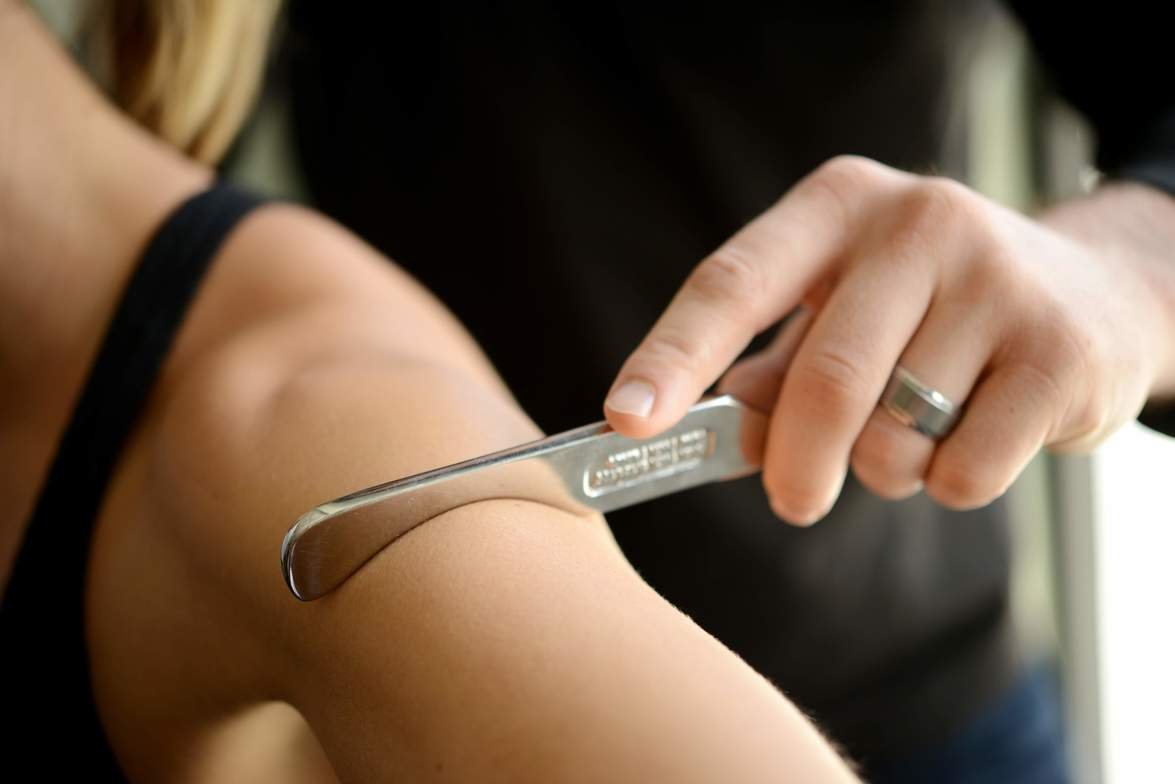
Instrument Assisted Soft Tissue Mobilization, or IASTM, is a soft tissue treatment that uses specialized instruments to work on muscles, tendons, and other soft tissues.
You may have also heard it called Graston Technique.
I've completed both M1 and M2 Graston Technique training and have been using these techniques with patients for years.
The easiest way to explain it is this: instead of using only my hands to work on a muscle or tendon, the instruments give me another way to feel and treat the tissue.
It's not something every patient needs, but for the right problem, I really like having it as an option.
What Exactly Is IASTM?
IASTM sounds much more complicated than it actually is.
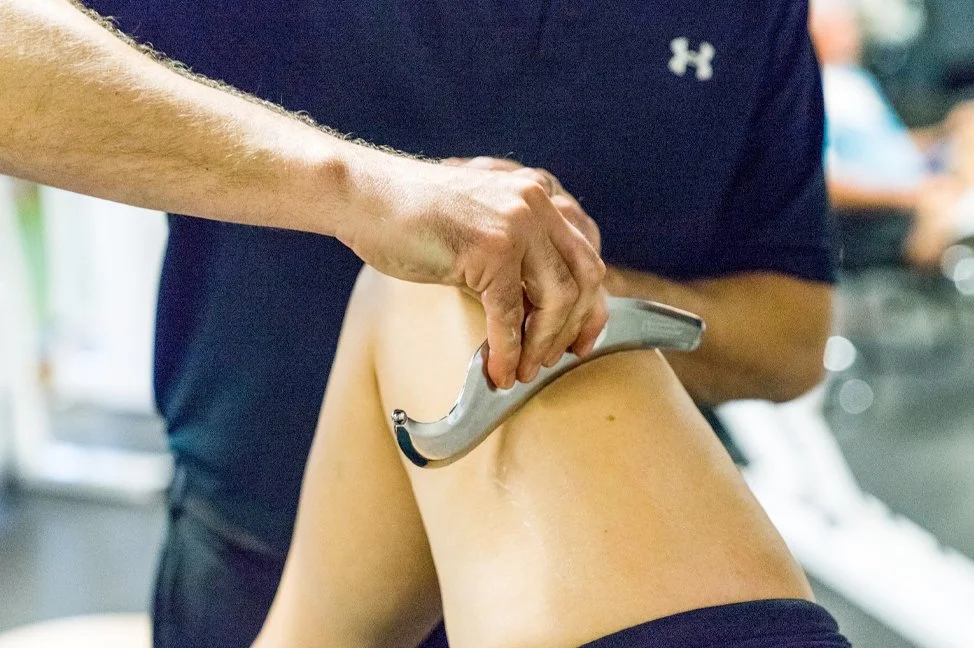
I use specially designed stainless-steel instruments and glide them over the area we're treating.
The instruments allow me to work on the soft tissue differently than I can with my hands alone. Depending on what we're treating, I can change the instrument, angle, pressure, and technique I'm using.
Some areas only need light pressure.
Other areas can tolerate a little more.
Like everything else we do, the treatment depends on the patient and the problem.
What Do We Use It For?
I use IASTM most often when a muscle, tendon, or other soft tissue is part of what we're treating.
That can include things like:
- Tennis elbow
- Golfer's elbow
- Achilles tendon problems
- Plantar fasciitis
- Shoulder and rotator cuff problems
- Muscle strains
- Sports and exercise-related injuries
- Tight or irritated muscles
- Other tendon and soft tissue problems
That doesn't mean everyone with one of those conditions automatically gets IASTM.
First, I want to figure out what's actually going on. Then we can decide whether this is a treatment that makes sense.
What Does Graston Feel Like?
This depends a lot on the area we're treating.
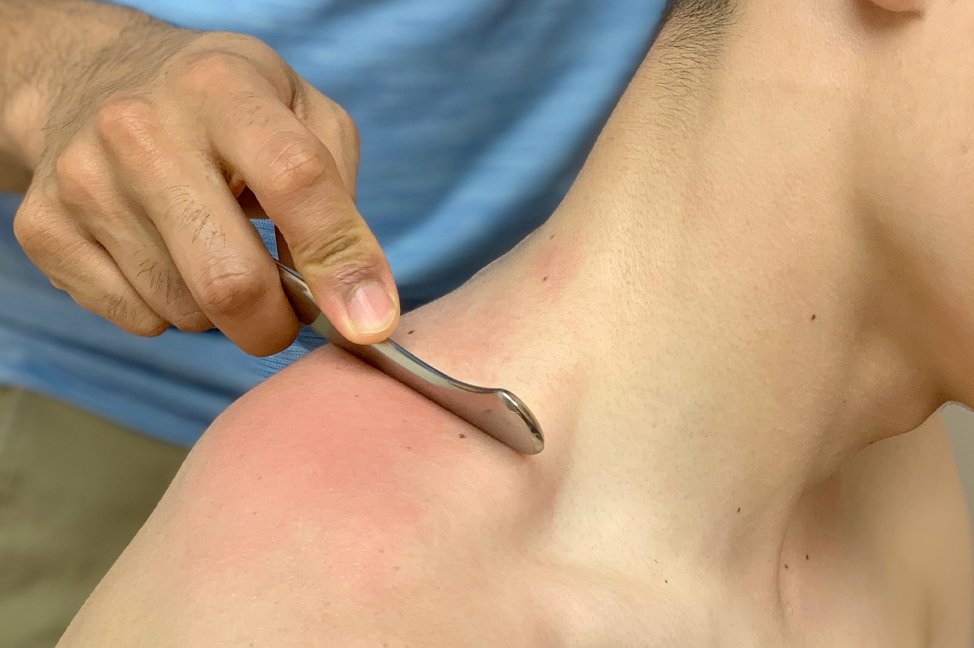
You may feel pressure, scraping, or some tenderness as the instrument moves over the skin.
Some spots might feel completely fine while another area is noticeably more sensitive.
The goal isn't to see how much pain you can tolerate.
More pressure doesn't automatically mean a better treatment.
I'll adjust what I'm doing based on the area we're treating and how you're responding to it.
And if something is too uncomfortable, tell me.
Am I Going to Be Covered in Bruises?
Hopefully not.
Some temporary redness after treatment can happen, and certain areas may be a little tender afterward.
But I'm not trying to beat you up with a piece of metal.
IASTM sometimes gets presented online as if bruising is proof that the treatment "worked." That's not my goal.
I'm trying to treat the area appropriately, not leave you looking like you got into a fight.
Graston Is a Technique, Not the Entire Treatment Plan
This is probably the most important thing to understand about IASTM.
It's a tool.
If you come in with tennis elbow, for example, I'm not automatically going to scrape your elbow for 10 minutes and send you home.
We still need to look at why you're having the problem and what else may need to be addressed.
Depending on the condition, treatment might include:
- IASTM
- Chiropractic adjustments
- Rehabilitation exercises
- Stretching or mobility work
- Massage therapy
- Other soft tissue techniques
Sometimes IASTM plays a bigger role.
Sometimes I only use it for a few minutes as part of the rest of your treatment.
And sometimes I don't use it at all.
Why I Like Having IASTM Available
One of the things I like about our office is that I'm not limited to one way of treating a patient.
If something is primarily a joint problem, an adjustment may be a bigger part of what we're doing.
If there's a strength or movement component, rehab may be important.
If the muscles and tendons need some extra attention, IASTM gives me another option.
That's really how I look at it.
I don't need every patient to receive every treatment. I just want enough options available that we can use what makes sense for the person in front of me.
What Happens During Treatment?
There's really not much you need to do.
I'll expose the area we're treating and usually apply a small amount of lotion or lubricant so the instrument can move across the skin.
I'll then use one or more instruments to work on the area.
Treatment itself usually doesn't take very long and is commonly incorporated into the rest of your appointment.
Afterward, I may have you move the area again, perform an exercise, stretch, or continue with another part of your treatment.
Frequently Asked Questions
Another Tool in the Toolbox
IASTM isn't magic, and it isn't something every patient needs.
It's simply another treatment option I have available when the muscles, tendons, or other soft tissues need some extra attention.
I've invested in the training and the instruments because I like having different ways to treat different problems.
If I think Graston Technique makes sense for what you're dealing with, we'll use it.
If something else makes more sense, we'll do that instead.