Condition
Sports Injury Treatment & Rehabilitation in Limerick, PA
Whether you're a competitive athlete, a weekend golfer, a runner, or someone who enjoys going to the gym, dealing with an injury can be frustrating. Maybe you rolled your ankle playing basketball, developed shoulder pain from lifting weights, or started experiencing knee discomfort after increasing your running mileage.
Sometimes an injury happens suddenly. Other times, discomfort gradually develops until an activity you've been doing for years becomes painful.
At Keep It Kinetic Chiropractic, we help active patients throughout Limerick, Royersford, Pottstown, and surrounding communities manage sports-related injuries and return to the activities they enjoy. Our approach combines chiropractic care, hands-on treatment, and rehabilitation based on your particular injury and the demands of your sport.
Common Sports Injuries We Treat
Sports injuries can affect muscles, tendons, ligaments, joints, and other structures throughout the body.
Some of the more common problems we evaluate include:
Muscle Strains and Ligament Sprains
Muscle strains and ligament sprains can occur during sudden movements, changes in direction, falls, or direct impacts.
Ankle sprains, hamstring strains, and other soft tissue injuries can cause pain, swelling, weakness, and difficulty returning to normal activity.
Treatment depends on the severity of the injury. Mild to moderate injuries may respond well to appropriate rehabilitation, while more significant ligament or muscle injuries may require imaging, bracing, or orthopedic evaluation.
Tendon Injuries and Overuse Problems
Not every sports injury happens during one particular movement.
Conditions such as tennis elbow, Achilles tendinopathy, patellar tendinopathy, and rotator cuff-related shoulder pain often develop gradually as the demands placed on a tendon exceed what it can comfortably tolerate.
These problems can be especially frustrating because symptoms may improve with rest, only to return when you resume your normal exercise routine.
Progressive strengthening and appropriate activity modifications are often important parts of managing tendon-related injuries.
Shoulder Injuries
Shoulder pain is common in activities involving lifting, throwing, swimming, or repeated overhead movements.
Rotator cuff-related pain, muscle strains, and certain joint injuries can interfere with strength and comfortable movement.
Rehabilitation may focus on shoulder strength, mobility, and gradually rebuilding tolerance for the movements required by your sport.
Significant traumatic injuries, particularly those involving sudden weakness or suspected dislocation, require prompt medical evaluation.
Knee and Ankle Injuries
Running, jumping, cutting, and pivoting can place considerable demands on the knees and ankles.
Common problems include patellofemoral pain, ankle sprains, tendon injuries, and certain ligament or meniscus injuries.
Depending on the condition, rehabilitation may involve strengthening, balance training, and exercises that gradually prepare the injured area for more demanding movements.
Back and Neck Pain
Sports such as golf, tennis, weightlifting, and contact sports can sometimes aggravate the muscles, joints, or other structures of the spine.
Some athletes experience sudden back or neck pain, while others develop discomfort related to repeated physical demands.
Appropriate chiropractic treatment, exercise, and activity modifications may help manage certain mechanical back and neck problems.
Why Do Sports Injuries Happen?
Sports injuries rarely have one universal cause.
Sudden trauma, contact with another player, changes in training volume, previous injuries, fatigue, and the physical demands of a particular sport may all play a role.
For example, a runner who suddenly doubles their weekly mileage may develop symptoms because their tissues haven't adapted to the increased demands.
Someone returning to basketball after several months away may have difficulty tolerating repeated jumping and changes in direction.
That doesn't necessarily mean they have poor mechanics or that something is structurally wrong with their body.
Our goal is to understand the injury and identify factors that may be relevant to your recovery.
How We Treat Sports Injuries at Keep It Kinetic Chiropractic
We start by discussing how your injury occurred, what activities aggravate it, and what you're trying to return to.
Your examination may include evaluating joint mobility, strength, tenderness, balance, and movements relevant to your symptoms.
If we suspect a fracture, significant ligament injury, tendon rupture, concussion, or another problem requiring medical care, we'll recommend appropriate evaluation before proceeding with routine treatment.
For injuries suitable for conservative management, treatment may include:
Therapeutic Exercise and Sports Rehabilitation
Rehabilitation is one of the most important parts of recovering from many sports injuries.
Depending on your condition, we may recommend strengthening exercises, mobility work, balance training, and gradually increasing the amount of physical activity you can tolerate.
The exercises we choose depend on your injury and what you need to return to doing.
Someone recovering from an ankle sprain before returning to basketball has different demands than someone trying to get back to golf, distance running, or weightlifting.
As symptoms improve, rehabilitation may progress toward more challenging movements that better reflect your sport.
Our goal is to teach you exercises you can continue independently rather than making you dependent on office visits throughout your recovery.
Chiropractic Adjustments and Joint Mobilization
Sports injuries sometimes occur alongside joint stiffness, restricted mobility, or other musculoskeletal discomfort.
When appropriate, chiropractic adjustments or gentle joint mobilization may help improve comfortable movement and manage associated symptoms.
We treat joints throughout the body, not just the spine, so treatment may involve an ankle, wrist, shoulder, or another area when clinically appropriate.
Adjustments don't repair torn ligaments or tendons, and they aren't necessary for every sports injury.
Massage and Soft Tissue Therapy
Injuries can sometimes be accompanied by muscle tightness, tenderness, or discomfort in the surrounding tissues.
Massage therapy and instrument-assisted soft tissue treatment may help manage associated symptoms and make movement more comfortable.
These techniques can be useful alongside rehabilitation, but they don't physically break apart scar tissue or guarantee faster healing.
Supportive Taping and Activity Modifications
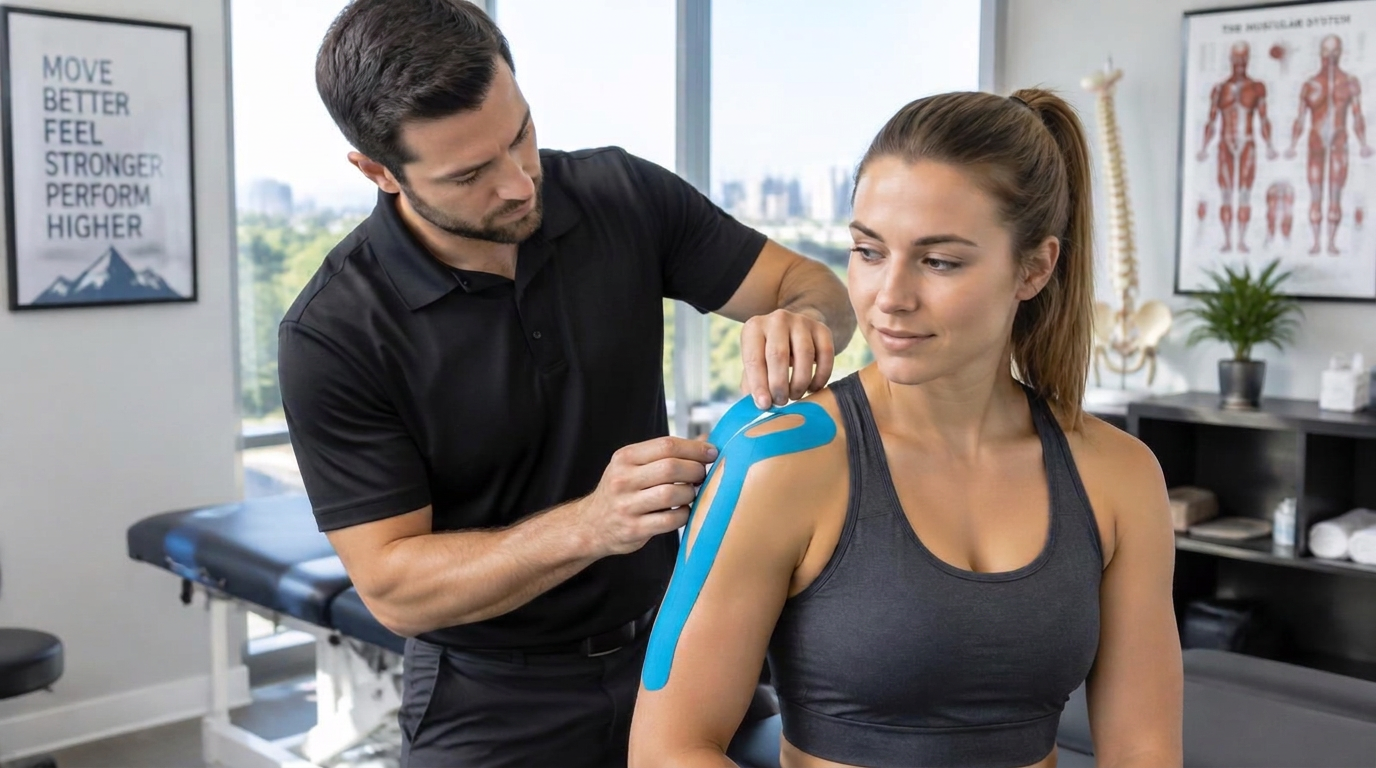
Depending on your injury, supportive taping or temporary changes to your activities may help manage symptoms.
For example, we might recommend adjusting your lifting volume, reducing running mileage, or modifying certain movements while the injured area recovers.
In some situations, a brace or other protective support may be appropriate.
The goal isn't necessarily to stop exercising completely. It's to find ways to maintain appropriate activity without repeatedly aggravating the injury.
When Can You Return to Sports After an Injury?
This is one of the most important questions athletes ask, and the answer depends on more than how many weeks have passed.
Pain improvement is important, but it doesn't always mean the injured area is ready for the full demands of your sport.
Depending on the injury, returning safely may involve rebuilding strength, restoring mobility, improving balance, and gradually tolerating more demanding movements.
For example, being able to walk comfortably after an ankle sprain doesn't automatically mean you're ready to sprint, jump, and change direction during a basketball game.
We'll help you understand which activities may be appropriate as you recover and when additional rehabilitation or sports medicine evaluation may be needed.
Frequently Asked Questions About Sports Injuries
Can a chiropractor help with sports injuries?
Chiropractors can help manage certain musculoskeletal sports injuries through appropriate evaluation, joint mobilization, soft tissue treatment, and rehabilitation. The recommended approach depends on the injury, and significant structural injuries may require additional medical or orthopedic care.
Should I rest or exercise after a sports injury?
It depends on the injury and how recently it occurred. Some injuries require an initial period of protection or reduced activity, while others benefit from carefully selected movement and progressive strengthening. Complete rest isn't always necessary, but exercising through a significant injury can also delay appropriate treatment.
How do I know when I'm ready to return to my sport?
Readiness depends on the injury, your symptoms, strength, mobility, and ability to perform movements specific to your sport. For more significant injuries, return-to-sport decisions may require formal rehabilitation testing or clearance from an appropriate medical provider.
Can chiropractic care prevent future sports injuries?
No treatment can guarantee that an injury won't happen again. However, addressing relevant strength, mobility, balance, and training limitations may help reduce certain injury risks and improve your ability to tolerate physical activity.
Get Help With Sports Injuries in Limerick, PA
Whether you're recovering from a recent injury, dealing with recurring pain during exercise, or struggling to return to a sport you enjoy, we're here to help you understand what's going on.
At Keep It Kinetic Chiropractic, we'll evaluate your symptoms, explain our findings, and recommend a practical treatment plan based on your injury and goals.
Our focus is on helping you recover, rebuild confidence in your movement, and return to the activities that matter to you without unnecessary treatment or unrealistic promises.
Schedule an appointment online or call/text us at 484-455-4664 to get started.
Ready to feel better?
Book online with Keep It Kinetic or call our Limerick office — we'll get you on the schedule.