
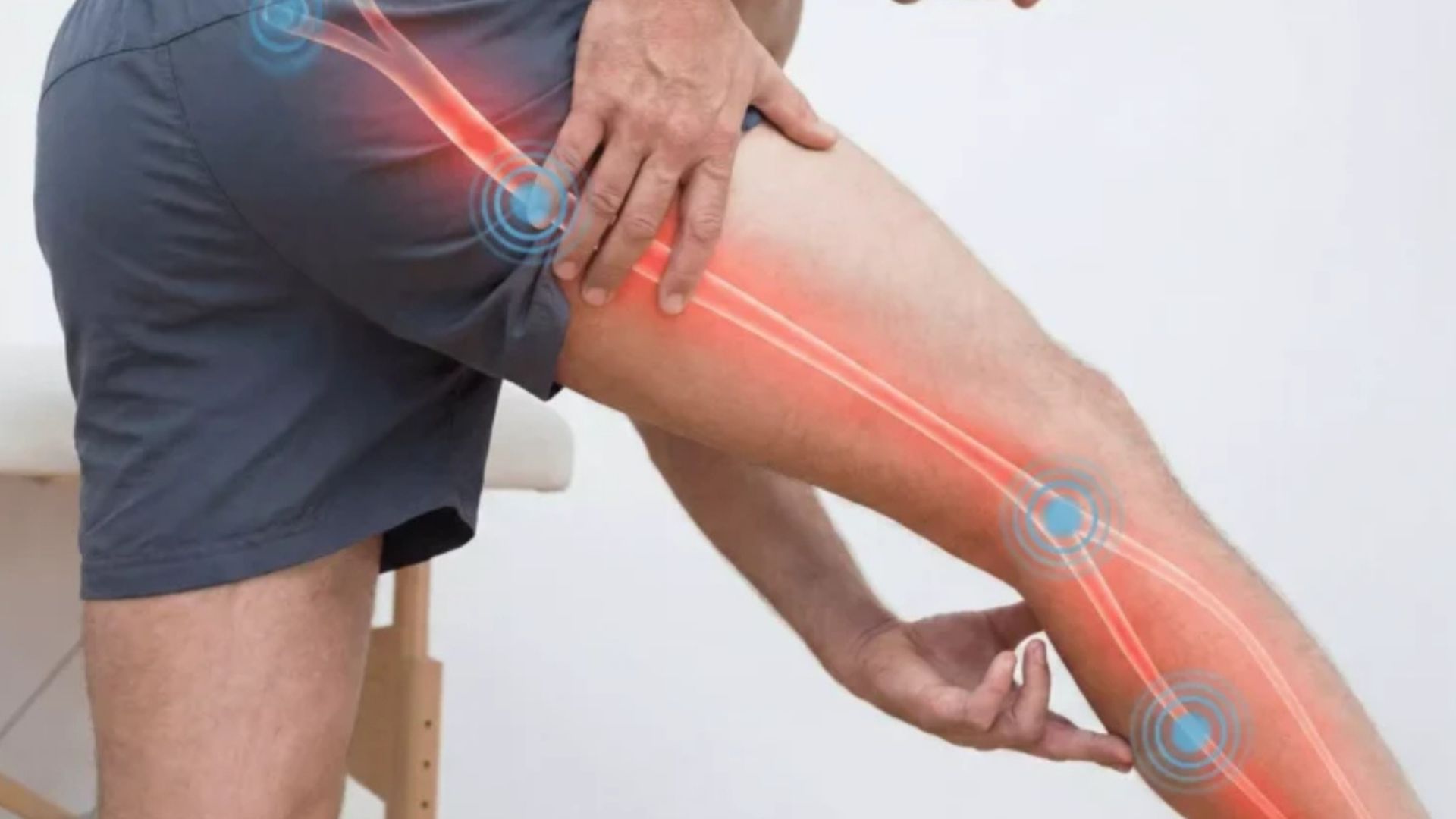
Sciatica can be frustrating, especially when the pain doesn't stay in one place. You might feel a sharp pain traveling from your lower back into your buttock and down your leg, a burning sensation in your calf, or numbness and tingling that reaches your foot.
For some people, sitting becomes uncomfortable. Others have difficulty standing, walking, driving, or finding a position that allows them to sleep comfortably. Sometimes the leg pain is considerably worse than any discomfort in the lower back.
At Keep It Kinetic Chiropractic, we help patients throughout Limerick, Royersford, Pottstown, and surrounding communities manage sciatica and related lower back problems. Our approach focuses on understanding what's causing your symptoms, determining whether conservative treatment is appropriate, and helping you return to your normal activities.
What Is Sciatica?
Sciatica describes pain and other symptoms that develop when nerves in the lower back become irritated or compressed.
Several nerve roots in the lumbar and sacral spine combine to form the sciatic nerve, which travels through the buttock and down the back of the leg.
When one of these nerve roots becomes irritated, symptoms can travel along the affected nerve's distribution. This is often referred to as lumbar radiculopathy.
Although people sometimes use the term sciatica to describe any pain around the buttock or hip, true sciatica generally involves nerve-related symptoms extending into the leg.
You can also have sciatica without experiencing significant lower back pain.
Common Causes of Sciatica
Several different conditions can contribute to sciatic nerve symptoms.
Herniated or Bulging Discs
A herniated disc is one of the more common causes of sciatica.
The discs between your vertebrae help absorb forces and allow movement throughout the spine. When part of a disc becomes displaced or herniated, it may irritate or compress a nearby nerve root.
This can result in pain, numbness, tingling, or weakness traveling into the leg.
However, not every disc bulge causes symptoms. Disc abnormalities are also commonly found in people who have no pain.
Spinal Stenosis
Spinal stenosis involves narrowing of the spaces surrounding the spinal nerves.
When this narrowing affects nerves in the lower back, patients may experience discomfort, heaviness, numbness, or weakness in one or both legs.
Symptoms associated with lumbar spinal stenosis often become worse during standing or walking and improve when sitting or bending forward.
Degenerative Changes in the Spine
Age-related changes involving the spinal discs, joints, and surrounding tissues can sometimes contribute to narrowing around nerve roots.
Although these changes may be associated with sciatica, they don't automatically cause symptoms. Many people have degenerative findings on imaging without experiencing pain.
Other Conditions That Mimic Sciatica
Not every pain traveling through the buttock or leg originates from a spinal nerve.
Certain hip conditions, deep gluteal muscle problems, and other musculoskeletal injuries can produce similar symptoms.
This is why identifying the source of your pain is important before deciding on treatment.
Common Symptoms of Sciatica
Sciatica can feel different from one patient to another.
Common symptoms include:
- Sharp, shooting, or burning pain traveling into one leg
- Pain extending from the buttock into the thigh, calf, or foot
- Numbness or tingling in part of the leg or foot
- Electric-like sensations during certain movements
- Discomfort that increases with sitting, bending, or coughing
- Leg or foot weakness when nerve function is affected
- Difficulty standing, walking, driving, or sleeping comfortably
Symptoms most commonly affect one side, although certain spinal conditions can cause problems in both legs.
The location of your symptoms and how they respond to movement can provide clues about which nerves or other structures may be involved.
When Is Sciatica a Medical Emergency?
Most cases of sciatica aren't medical emergencies. However, certain symptoms require immediate attention.
Seek emergency medical evaluation if you develop new difficulty controlling or emptying your bladder or bowels, numbness around the groin or saddle area, or severe or rapidly worsening weakness in your legs. New sciatica affecting both legs, particularly with neurological changes, also warrants emergency assessment.
These symptoms can sometimes indicate serious compression of nerves in the lower spine and should not be managed with routine chiropractic treatment.
How We Treat Sciatica at Keep It Kinetic Chiropractic
Our first step is determining what's contributing to your symptoms.
We'll discuss when your pain started, where it travels, which positions aggravate it, and how it's affecting your daily activities.
Your examination may include evaluating spinal mobility, muscle strength, sensation, reflexes, and other neurological findings. We may also use specific movements or orthopedic tests to help determine whether nerve irritation is present.
From there, we'll decide whether chiropractic treatment is appropriate or whether imaging or additional medical evaluation would be more beneficial.
Depending on your condition, treatment may include:
Chiropractic Adjustments and Spinal Mobilization
Certain patients with sciatica also experience lower back pain, joint stiffness, and restricted movement.
When appropriate, chiropractic adjustments or gentle spinal mobilization may help manage associated discomfort and improve mobility.
However, adjustments don't physically push herniated discs back into place or guarantee that pressure on a nerve will be relieved.
We select treatment techniques based on your symptoms and examination findings. Some patients may benefit from modified or gentler approaches, while others with significant neurological involvement may not be appropriate candidates for spinal manipulation.
Our goal is to help improve your comfort and function, not simply perform an adjustment because you're experiencing sciatica.
Therapeutic Exercise and Rehabilitation
Exercise and rehabilitation are important components of managing many cases of sciatica.
Depending on your condition, we may recommend exercises designed to improve spinal mobility, strengthen the muscles supporting your back, and gradually increase your tolerance for daily activities.
Some patients find that particular movements or positions reduce their leg symptoms, while others respond better to different exercises.
We may also incorporate gradual strengthening, walking, and movement-based exercises as symptoms improve.
Rehabilitation is individualized, and exercises are adjusted based on how your back and leg symptoms respond.
Our goal is to help you return to your normal activities while giving you practical ways to manage symptoms outside the office.
Massage and Soft Tissue Therapy
Sciatica can sometimes occur alongside muscle tightness, tenderness, or discomfort around the lower back and hips.
Massage therapy and other soft tissue techniques may help manage these associated symptoms and make movement more comfortable.
These treatments don't necessarily address the underlying nerve compression, but they may be useful as part of a broader treatment approach.
Activity Modifications and Home Care
When sciatica is particularly painful, certain movements or positions may aggravate symptoms.
We may recommend temporarily modifying activities, changing positions more frequently, or adjusting your exercise routine while symptoms improve.
For most patients, prolonged bed rest isn't recommended. Maintaining comfortable movement and gradually returning to normal activities are generally important parts of recovery.
We'll help you determine which activities you can continue and which may need temporary adjustments.
Can Sciatica Improve Without Surgery?
Yes. Many people with sciatica improve with time and conservative management.
In cases involving a herniated disc, inflammation and nerve irritation may gradually decrease. Some herniated disc material can also naturally shrink or be reabsorbed over time.
Symptoms often improve within several weeks to a few months, although recovery can take longer depending on the underlying condition and severity of nerve involvement.
Improvement doesn't necessarily mean that every abnormality visible on an MRI has disappeared.
For some patients, conservative treatment is sufficient. Others with persistent disabling symptoms, significant nerve compression, or worsening neurological function may benefit from medical treatments such as injections or surgical evaluation.
We don't believe every case of sciatica should be managed in a chiropractic office. If your condition requires another approach, we'll discuss that with you.
Frequently Asked Questions About Sciatica
Can a chiropractor help with sciatica?
Chiropractic care may help selected patients manage sciatica-related back pain and mobility limitations. Depending on your condition, treatment may include carefully chosen spinal manipulation or mobilization, therapeutic exercise, and activity modifications. However, chiropractic adjustments aren't a proven way to eliminate every cause of nerve compression.
How long does sciatica take to go away?
Many cases improve over several weeks to a few months, but recovery varies. Some people improve relatively quickly, while others experience symptoms for longer periods, particularly with significant disc injuries or spinal stenosis.
Is walking good for sciatica?
Walking can be beneficial for many patients, provided it doesn't substantially aggravate their symptoms. Shorter, more frequent walks may be more comfortable initially. Patients with spinal stenosis may have different walking tolerances, so recommendations should be individualized.
Do I need an MRI for sciatica?
Not necessarily. Many uncomplicated cases can initially be evaluated without imaging. An MRI may be appropriate when neurological deficits are significant or worsening, symptoms persist despite appropriate treatment, or the results would influence decisions about additional medical care.
Is sciatica the same as piriformis syndrome?
No. Sciatica commonly involves irritation of a spinal nerve root, while piriformis syndrome is a term often used for irritation of the sciatic nerve around the deep buttock muscles. These conditions can cause overlapping symptoms but may require different treatment approaches.
Get Help With Sciatica in Limerick, PA
If you're experiencing pain traveling into your leg, persistent tingling, or discomfort that's making it difficult to sit, walk, or sleep comfortably, we're here to help you better understand what's going on.
At Keep It Kinetic Chiropractic, we'll evaluate your symptoms, explain our findings, and recommend treatment based on your individual needs.
Our goal is to help you move more comfortably and return to your normal activities without unnecessary appointments or promises we can't support.
Schedule an appointment online or call/text us at 484-455-4664 to get started.
Ready to feel better?
Book online with Keep It Kinetic or call our Limerick office — we'll get you on the schedule.