
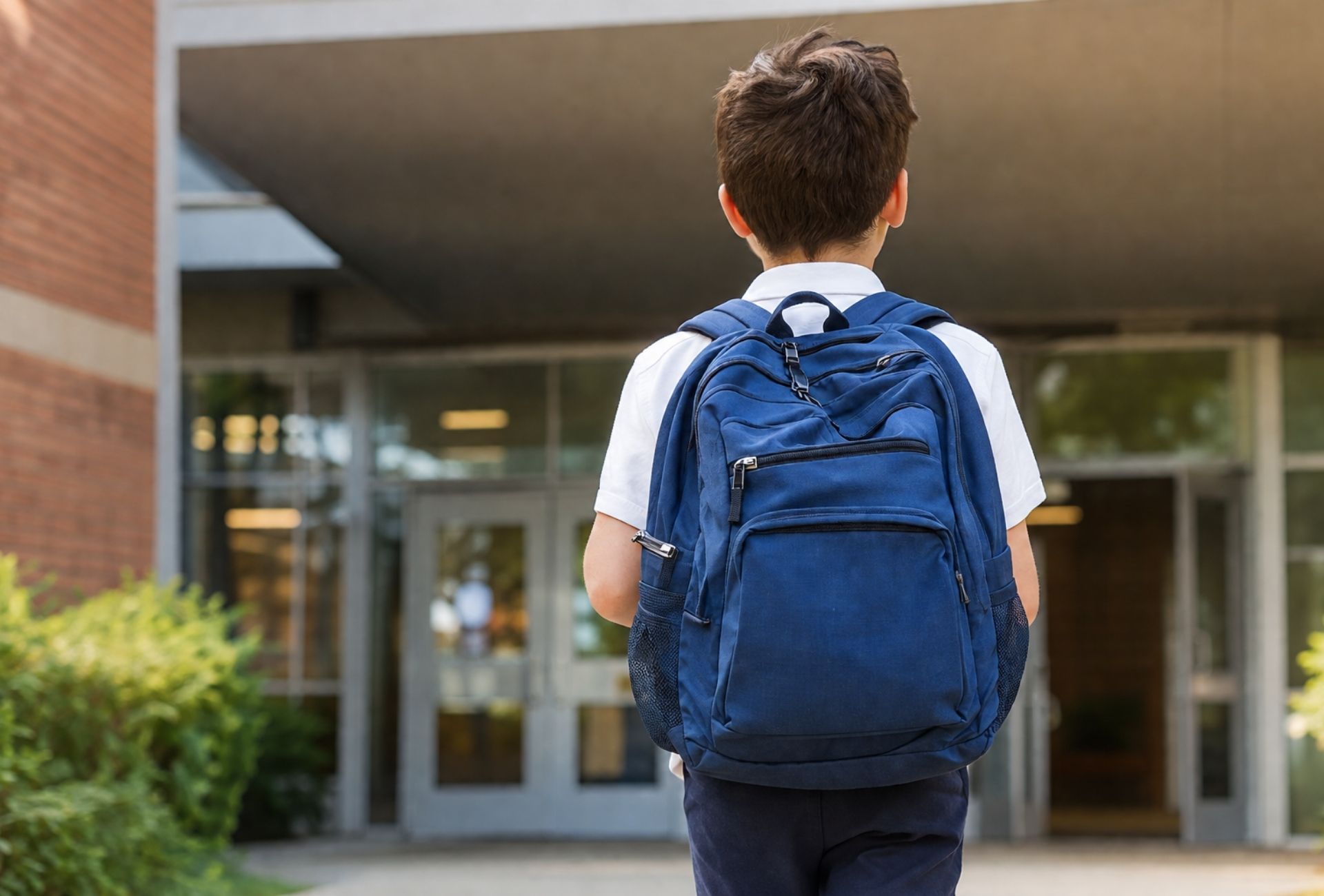
The first weeks of a new school year are when we start hearing it from parents around Limerick and Pottstown: “Have you seen how heavy that backpack is?” It's a fair question. A loaded pack, carried the wrong way five days a week, can leave kids with achy shoulders, a tired lower back, and some habits worth correcting early.
What a Heavy Backpack Does to a Growing Body
When a pack is too heavy or hangs too low, kids compensate: they lean forward at the hips, arch the lower back, or hike one shoulder up — especially with the one-strap sling carry. None of that is a crisis on any single day. Repeated all school year, it can add up to muscle strain and neck, shoulder, and back complaints.
An Honest Note About Backpacks and Scoliosis
Here's something worth saying plainly, because it circulates every September: heavy backpacks have not been shown to cause scoliosis. Both the American Academy of Pediatrics and the American Academy of Orthopaedic Surgeons are clear on this point. The reason to care about backpack habits isn't fear of a curved spine — it's the everyday strain, soreness, and posture habits that make school days harder than they need to be.
The Numbers That Matter
- Weight: The AAP advises that a backpack shouldn't weigh more than about 15% of a child's body weight. For a 60-pound child, that's roughly 9 pounds — less than many loaded packs we see.
- Position: The bottom of the pack should sit in the curve of the lower back and hang no more than about 4 inches below the waistline.
- Straps: Two wide, padded straps, worn on both shoulders, adjusted snug. The one-shoulder carry concentrates the entire load on one side.
How to Pack and Fit It Right
The AAP's back-to-school guidance boils down to a few habits:
- Pack the heaviest items — textbooks, laptop — closest to your child's back
- Use the compartments so weight is spread evenly side to side
- Do a weekly cleanout together; packs collect surprising dead weight
- Leave what isn't needed at home or in a locker
- Teach kids to bend at the knees when picking the pack up
Warning Signs Worth Noticing
- Leaning forward to walk while wearing the pack (it's too heavy)
- Red strap marks on the shoulders after taking it off
- Complaints of back, neck, or shoulder pain during or after wearing it
- Any tingling or numbness in the arms — have that evaluated
Posture Habits That Start at the Desk
The backpack gets the attention, but for most kids the bigger posture issue is what happens after they take it off: several hours a day sitting in a classroom, then homework at the kitchen table, then a phone or tablet for the rest of the evening. These habits don't hurt in a single sitting — they accumulate over 180 school days. We look at how everyday positioning decisions affect the spine in our post on daily habits that cause back pain, and most of it applies directly to school-age kids.
A few adjustments worth making this school year:
- Raise the screen. Reading a laptop or tablet held low in the lap pulls the head and neck forward for the entire session. Propping screens up toward eye level — a stand, a couple of textbooks, an adjustable surface — cuts that load significantly across the week.
- Build in movement breaks. Thirty to forty-five minutes of sitting, then a brief stand and stretch, is roughly the rhythm physical therapists recommend for adults at office desks. It applies just as well to kids doing homework.
- Check the chair and desk fit. Feet flat on the floor, hips at about 90 degrees, and arms at comfortable writing height. A setup that's slightly off, used for an hour every evening for a full school year, adds up in the neck and upper back.
These aren't fixes that require a new desk or perfect ergonomics — small, realistic adjustments tend to stick better than a full overhaul. The combination of a well-fitted backpack and a few sensible sitting habits covers most of what drives school-year posture complaints.
How We Can Help
We see patients of all ages at Keep It Kinetic, and a quick posture and spine check is an easy way to get ahead of school-year aches. If your child is already complaining, gentle chiropractic care may help relieve back and neck strain, and we'll show them carrying and posture habits that make the daily load easier. And if what we find isn't backpack-related, we'll tell you that too — honest recommendations are the whole point of how we practice.
Frequently Asked Questions
How heavy is too heavy for a school backpack?
A useful rule of thumb from the AAP: no more than about 15% of your child's body weight. If your child has to lean forward to carry it, it's too heavy regardless of the number.
Are rolling backpacks a good alternative?
They can be for kids who carry very heavy loads, though stairs, buses, and crowded hallways can make them impractical — and some schools limit them. Lightening and properly fitting a standard pack solves the problem for most kids.
When should a parent bring a child in?
If back, neck, or shoulder complaints keep coming back, if pain shows up during normal daily activities, or if you notice posture changes that concern you, an evaluation can sort out what's going on and what may help.
Start the School Year With a Spine Check
A few small adjustments to how a pack is loaded and worn can make a long school year a lot more comfortable.
Call 484.455.4664, book online, or contact our Limerick office — we serve Limerick, Pottstown, Royersford, Collegeville, and the surrounding Montgomery County communities.
Related care at Keep It Kinetic
- Disc Injuries — Care for bulging and herniated discs.
- Sciatica Relief — Targeted care for radiating leg pain.
- Rehab & Corrective Exercise
- Shoulder Pain Treatment
Further reading: NIH NIAMS: Back Pain