Chiropractic Adjustment Techniques: Diversified, Thompson, Gonstead, Activator
· Keep It Kinetic Chiropractic
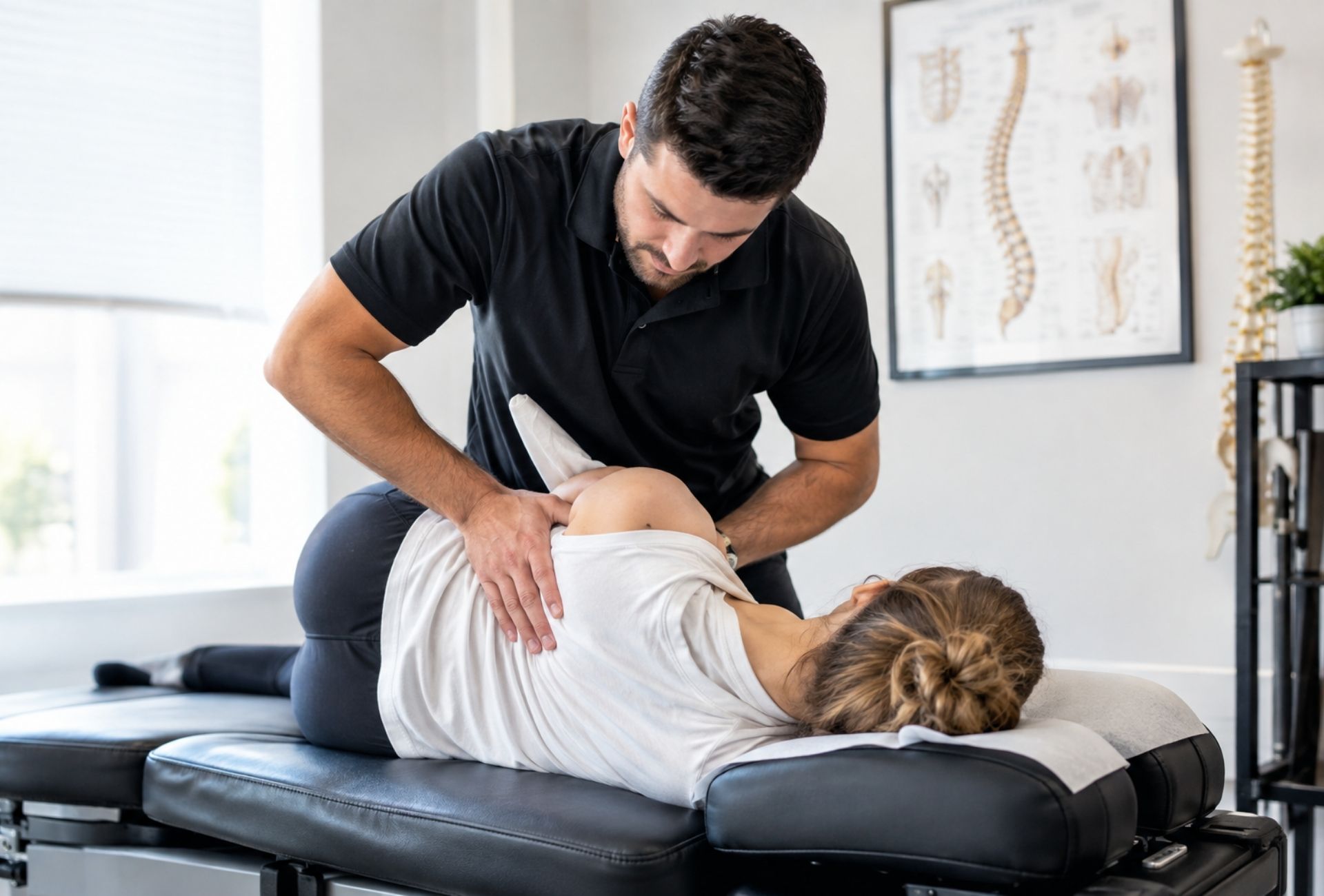
Patients sometimes ask whether they'll hear a “crack” during their adjustment — or whether they can request one without the crack. The answer to both is yes, depending on the situation. Chiropractic adjustments come in several forms, and understanding the most common ones can help you know what to expect and why your provider chooses a particular approach for your visit.
What a Chiropractic Adjustment Actually Does
The goal of a chiropractic adjustment is to restore comfortable, full motion to a joint that has become restricted. According to the National Center for Complementary and Integrative Health, spinal manipulation involves applying a controlled thrust to a joint to move it beyond its passive range of motion — further than it would go on its own, but within its anatomical limits. The familiar “pop” or “crack” is the release of gas from the joint fluid, not bones cracking. Not every technique produces that sound, and the sound itself isn't what makes an adjustment effective.
Diversified Technique
Diversified is the most widely used chiropractic technique. It's a hands-on, high-velocity low-amplitude (HVLA) thrust applied to specific spinal or extremity joints. You'll typically be positioned lying on your side, face-down, or on your back depending on which segment we're working on. This is the approach that most people picture when they think of chiropractic care, and it's often what produces the audible release. Dr. Kyle uses Diversified as a primary technique and tailors the setup, angle, and force to each patient's presentation.
Thompson Drop Technique
Thompson Drop uses a specialized table with sections that can be raised and quickly drop away when the adjustment is delivered. The drop mechanism absorbs much of the force, meaning the thrust required is lighter — the table does some of the work. This makes Thompson Drop a good option for patients who prefer a lower-force approach, who have more acute presentations, or for whom certain positioning is more comfortable. It's also commonly used for pelvis and sacral adjustments.
Gonstead Technique
The Gonstead system involves a detailed analysis — including posture evaluation, motion palpation, and a careful review of any imaging — before selecting the specific segment and vector for the adjustment. Gonstead applies a precise, targeted HVLA thrust with the patient seated, standing, or lying down depending on the area. The emphasis is on finding the specific level that is restricted and adjusting only that level, rather than working through a broader region of the spine. It's a methodical approach that works well for patients with more complex presentations.
Activator Method
The Activator is a small spring-loaded instrument that delivers a very quick, very low-force impulse to a joint. It produces no audible pop and requires no twisting or thrusting. The NIH NCCIH overview of chiropractic care notes that instrument-assisted techniques are one of several approaches chiropractors use alongside manual manipulation. The Activator is particularly useful for patients who are apprehensive about manual adjustments, for older adults with more fragile presentations, and for certain areas where precision is needed and a full manual setup isn't ideal.
How We Choose the Right Technique
No single technique is right for every patient or every visit. The NCCIH's review of complementary approaches for low back pain notes that spinal manipulation in general shows moderate benefit for both acute and chronic presentations — but the clinical decision about which technique to apply involves the specific joint involved, the patient's age and condition, their comfort with different approaches, and what the exam findings suggest. At Keep It Kinetic, we discuss technique with you, explain what we're doing and why, and adjust our approach based on how you respond.
What to Expect During Your Visit
Your first visit includes a thorough history and physical examination before any adjustment is performed. We review your specific complaint, movement, orthopedic and neurological findings, and any relevant imaging. The technique used for your adjustment follows from that information — not from a one-size-fits-all protocol. If you have a preference, or if a particular approach makes you nervous, tell us. Our first visit page gives you an overview of what the whole appointment looks like.
Frequently Asked Questions
Does the “crack” mean the adjustment worked?
No. The sound is the release of nitrogen gas from the joint, and it has no bearing on whether the adjustment achieved its goal. Instrument-assisted techniques and some manual approaches produce no sound at all and are equally effective for the right presentations.
Can I request a specific technique?
Yes, and we welcome that conversation. If you've had a good experience with a particular approach, or if something made you uncomfortable before, tell us at the start of your visit. We'll explain what we think is indicated and work with your preferences.
Is one technique safer than another?
All four techniques described here are well-established and safe when applied appropriately. Lower-force approaches like Thompson Drop and Activator are typically used when a gentler touch is indicated by the patient's presentation. The right technique is the one that matches the clinical picture — which is why the exam comes first. If you have a specific concern about a technique based on a previous experience, raise it before the appointment begins rather than during it; that gives us time to plan the right approach for you.
Questions About Your First Adjustment?
We're happy to walk you through exactly what to expect before your visit.
Call 484.455.4664, book online, or contact our Limerick office — we serve Limerick, Pottstown, Royersford, Collegeville, and the surrounding Montgomery County communities.
Related care at Keep It Kinetic
- Back Pain Treatment — How we evaluate and treat low back pain in Limerick & Pottstown.
- Disc Injuries — Care for bulging and herniated discs.
- Sciatica Relief — Targeted care for radiating leg pain.
- Rehab & Corrective Exercise
Further reading: NIH NIAMS: Back Pain