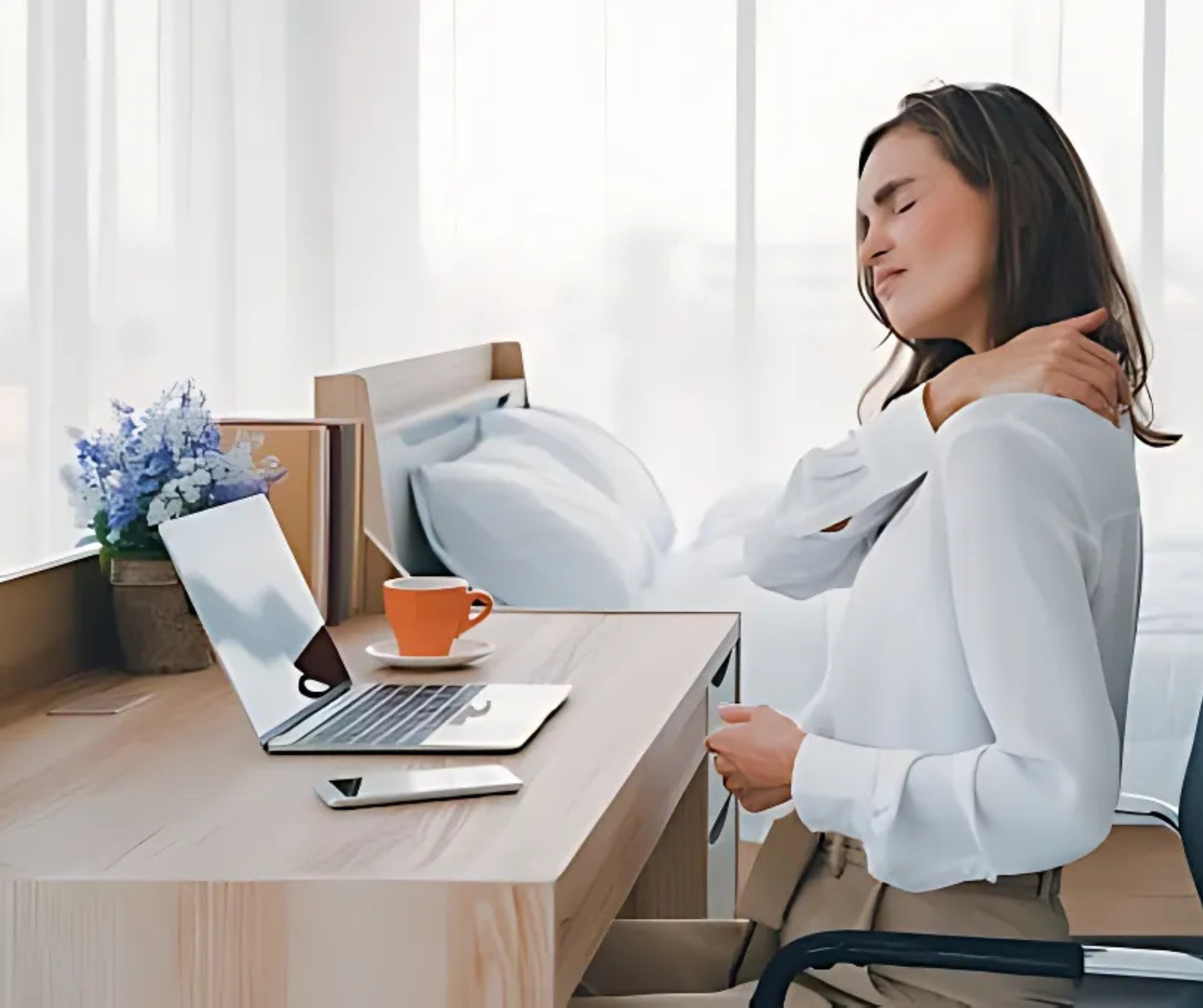
If you work at a desk and your back hurts, you have probably heard it's your posture. The research points somewhere more useful.
Time sitting matters more than how you sit
The Royal Australian College of General Practitioners (RACGP) clinical guide on posture says that low back pain risk "showed a strong correlation with increasing time sitting but not seated posture." It adds that "movement and changing positions to reduce time in sustained postures are likely more important than posture itself."
Break up the day
The NHS (a UK source) adult activity guidelines say to reduce time spent sitting or lying down and break up long periods of not moving with some activity. They also recommend at least 150 minutes of moderate-intensity activity a week and strengthening activities on at least 2 days a week. The World Health Organization advises that all age groups limit time spent sedentary.
The sources we reviewed don't say how often to stand or for how long, so we won't give a number. The direction is clear, though: change position often and don't stay put for hours.
A sensible desk setup
The US Occupational Safety and Health Administration (OSHA) lists these features for a computer workstation: the top of the monitor at or just below eye level, the lower back supported, feet flat on the floor, elbows close to the body and supported, and shoulders relaxed. It also says "there is no single 'correct' posture or arrangement of components that will fit everyone." Treat the list as a starting point and adjust to what feels comfortable.
If your back already hurts
The NHS advice on back pain is to "stay active and try to continue with your daily activities" and not to stay in bed for long periods. For back pain, the American College of Physicians lists spinal manipulation among the non-drug options alongside heat, massage and acupuncture for acute and subacute pain.
The NHS lists these as reasons for urgent help: pain, tingling, weakness or numbness in both legs; loss of feeling around the genitals or anus; changes in bladder or bowel control; chest pain; or back pain that started after a serious accident. If you have any of these, go to the nearest emergency room or call 911.
Next step
If desk work is taking a toll on your back, book online or call 484.455.4664. Our ergonomic and lifestyle advice page has more on setup. Keep It Kinetic Chiropractic is at 3254 W Ridge Pike, Suite 202, Pottstown, PA 19464.
Related care at Keep It Kinetic
- Back Pain Treatment — How we evaluate and treat low back pain in Limerick & Pottstown.
- Disc Injuries — Care for bulging and herniated discs.
- Sciatica Relief — Targeted care for radiating leg pain.
- Rehab & Corrective Exercise
Further reading: NIH NIAMS: Back Pain