
Surviving Holiday Travel: Protecting Your Back and Neck in the Car and on the Plane
· Keep It Kinetic Chiropractic
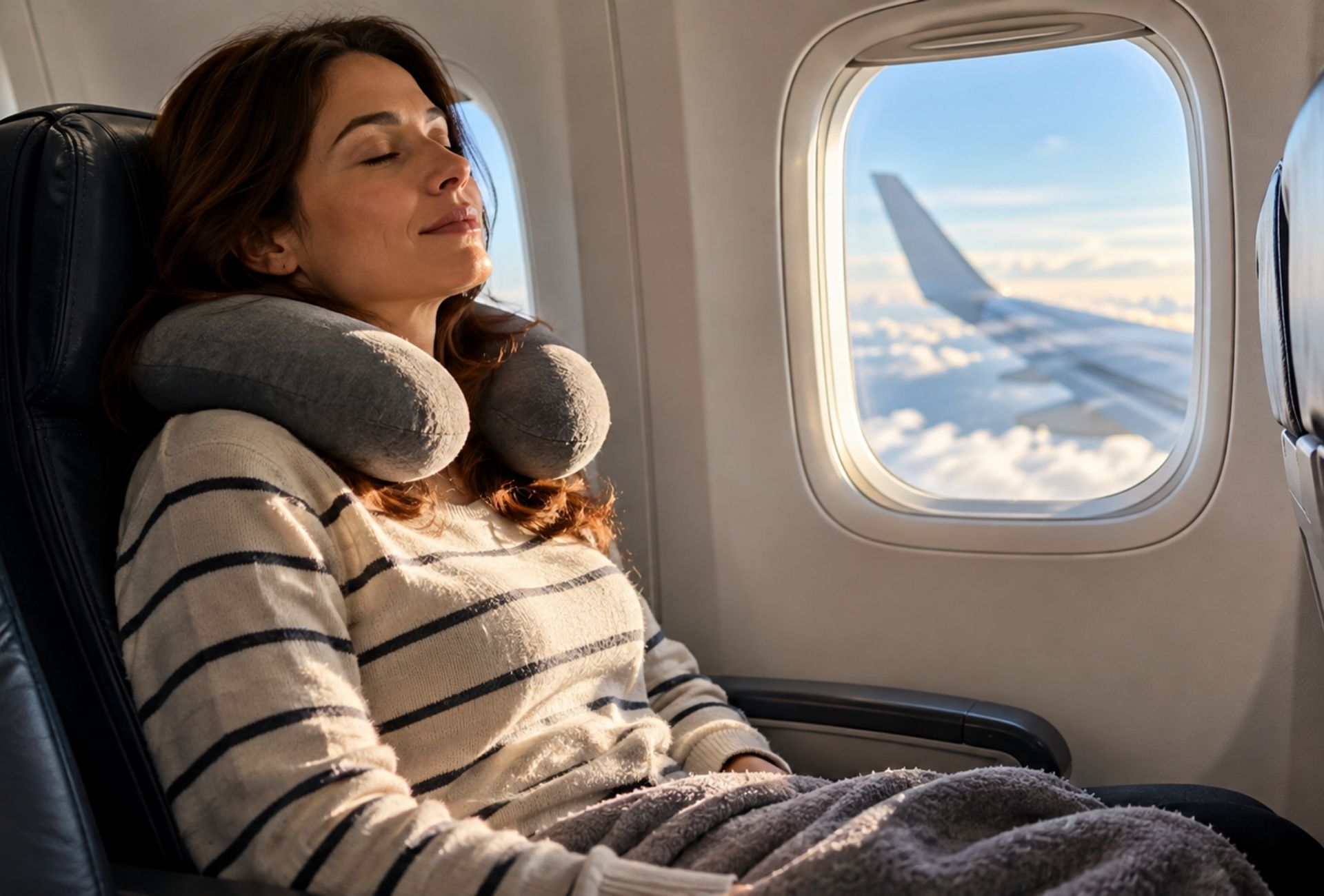
The holidays mean more time in transit — hours in a car over a Thanksgiving drive, long flights across the country, or the Amtrak packed with fellow travelers heading home. By the time you arrive, your back is stiff, your neck aches, and you spend the first half of the visit trying to loosen up. None of that is inevitable. A bit of planning makes a real difference.
Why Sitting Still Is Hard on Your Spine
The spine is designed for movement. Extended sitting, especially in the fixed positions of a car seat or airplane seat with limited lumbar support, compresses the discs between your vertebrae, shortens the hip flexors, and puts sustained load on the facet joints and posterior muscles. The AAOS guidance on preventing back pain emphasizes avoiding prolonged sitting and changing positions regularly as core strategies — which is easier in a desk chair than in an airplane middle seat, but the principle applies.
Neck pain during travel often comes from a different source: the head-forward position that develops when you're reading, looking at a screen, or sleeping against a headrest that doesn't support the neck's natural curve. Hours of sustained neck flexion loads the cervical spine in a way that most people feel by the next morning.
In the Car: What to Change
- Adjust your seat before you start. Your knees should be at about 90 degrees or slightly lower than your hips. Seat too far back forces you to lean forward for the wheel; too close compresses the hips. Lumbar support should contact the curve of your lower back, not push you forward.
- Stop every 90 minutes. Get out, walk for two to three minutes, and do a few gentle spinal movements. Standing and hip circles after 90 minutes of sitting reset the tissues. A three-hour drive that includes one proper stop is better on your back than a three-hour push.
- Alternate who drives if you can. The sustained gripping and slight forward lean of driving adds neck and shoulder load that the passenger position doesn't.
- Be careful loading and unloading the car. Reaching into a trunk at an awkward angle with a heavy bag is a common injury moment. Lift with your legs, keep loads close, and ask for help with anything heavy.
On the Plane: Working With What You Have
- Bring a small lumbar support. Most airline seats have minimal lumbar contouring. A small inflatable travel pillow or a rolled-up jacket in the small of your back can meaningfully change the load on your lumbar spine over a long flight.
- Move in your seat. Ankle circles, gentle knee raises, shifting your weight from one side to the other every 20 to 30 minutes, and brief aisle walks when the seatbelt sign is off help maintain circulation and break up the static load.
- Watch your neck position. A U-shaped travel pillow that supports the neck rather than pushing the head forward helps. If you're watching a screen, keep it at eye level if possible rather than holding it in your lap.
- Hydrate. Aircraft cabin air is very dry, and dehydration contributes to disc stiffness. Water is the right call for long flights, not only coffee.
The Night Before and the Morning After
The Mayo Clinic's guidance on back pain self-care notes that regular physical activity — including consistent movement in the weeks before a long trip — is one of the most effective ways to prepare the back for unusual demands. A 20-minute walk and some light core activation the morning of a long drive or flight makes a meaningful difference in how your back tolerates it.
After arrival, resist the urge to collapse immediately. A 10-minute walk and a few targeted stretches do more for travel stiffness than lying on the hotel bed. If you arrive to visit family with your back already tight, that stiffness tends to compound over a few days of holiday activity.
When Travel Turns Into an Injury
Most holiday travel discomfort is muscle tension and stiffness that clears with movement and time. Seek evaluation if you experience pain that travels down an arm or leg, significant worsening after the trip, or pain that doesn't improve within several days of returning to your normal routine. The Harvard Health back pain resource is a useful overview of when back pain warrants professional attention.
How Chiropractic Care Fits In
A pre-travel visit can help ensure your spine is moving well before a long drive or flight, reducing the strain any postural compromise adds. Post-travel, care focused on restoring cervical and lumbar mobility can clear up lingering stiffness much faster than waiting it out. If holiday travel consistently leaves you with several days of recovery, that's a pattern worth addressing rather than managing year to year. Our back pain and neck pain pages cover our approach to both presentations.
Frequently Asked Questions
How long before a long trip should I get an adjustment?
Ideally within a week or two before travel, so any residual soreness from the adjustment has resolved and your spine is moving well when you get in the car or on the plane. If you're already in discomfort when you book the trip, come in as soon as you can.
Is it OK to fly with a herniated disc?
For most people, yes — with appropriate precautions like lumbar support, frequent movement, and not overpacking carry-on bags you'll need to lift into overhead bins. If you have significant nerve symptoms (radiating leg or arm pain, weakness, numbness), talk to your provider before a long flight.
What helps with post-travel stiffness?
Gentle movement is the most effective first step: walking, light stretching, and avoiding sitting back down immediately after arrival. Heat applied to the stiff area can help muscles relax. If stiffness persists beyond a couple of days, an evaluation is worthwhile.
Traveling Soon? Come In Before You Go.
A pre-trip visit is one of the simplest things you can do to set your spine up for a long drive or flight.
Call 484.455.4664, book online, or contact our Limerick office — we serve Limerick, Pottstown, Royersford, Collegeville, and the surrounding Montgomery County communities.
Related care at Keep It Kinetic
- Disc Injuries — Care for bulging and herniated discs.
- Sciatica Relief — Targeted care for radiating leg pain.
- Rehab & Corrective Exercise
- Auto Accident Injury Care
Further reading: NIH NIAMS: Back Pain