
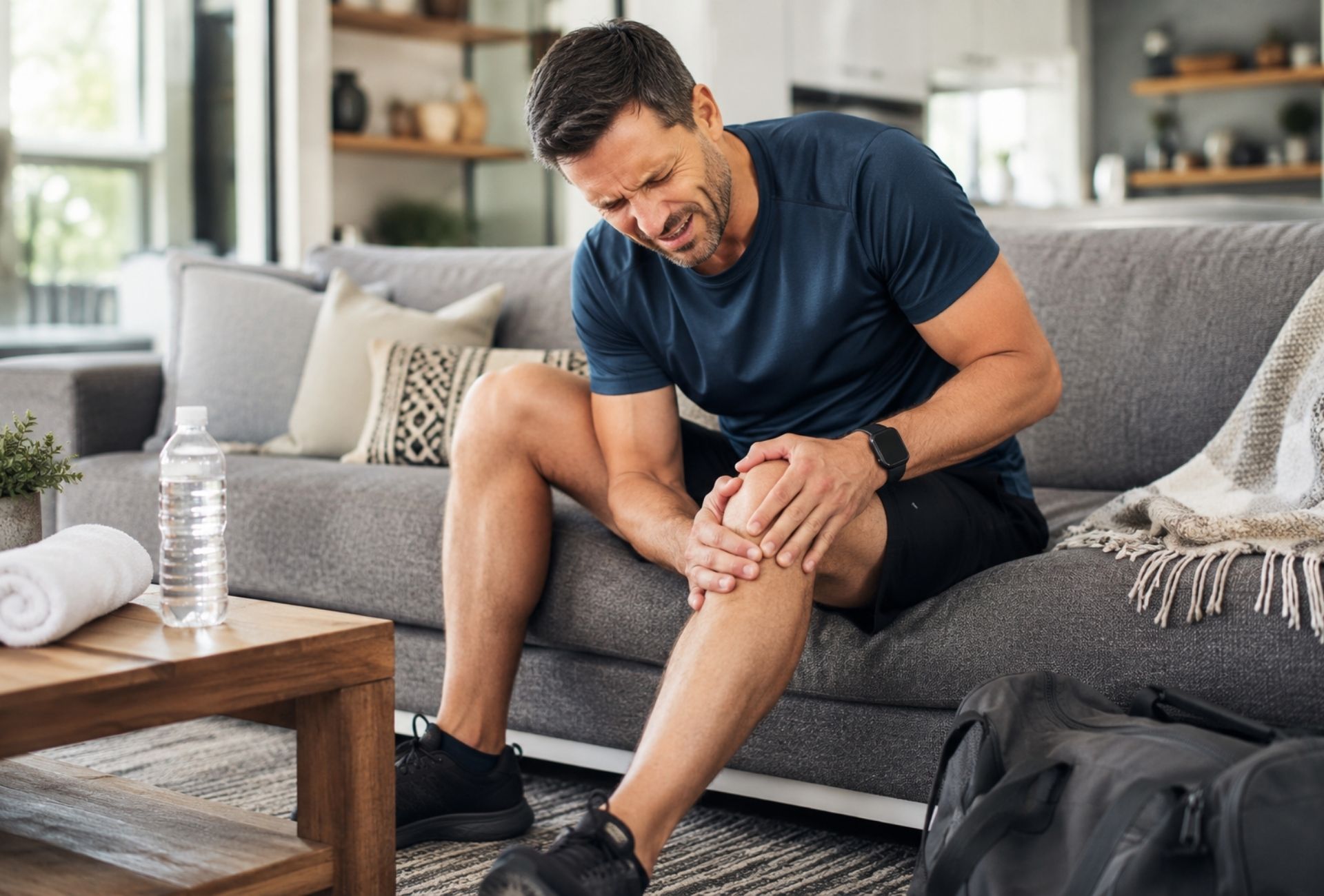
Labor Day weekend in Montgomery County usually means more movement than a normal week: pickup games, long walks, hours of yard work, a round of golf, or a full day of hauling coolers and folding chairs. If you woke up a day or two later feeling stiff in places you forgot you had, you're in good company — and there's a name for what you're feeling.
Why You Hurt More on Tuesday Than You Did on Sunday
That deep, achy soreness that peaks a day or two after activity is called delayed onset muscle soreness, or DOMS. According to the Cleveland Clinic, DOMS typically begins one to three days after intense or unfamiliar exercise and fades as your muscles recover and rebuild. It shows up most after activity your body isn't accustomed to — which describes most holiday weekends perfectly.
DOMS is usually uncomfortable rather than dangerous. The timing is what surprises people: you feel fine Sunday night, a little tight Monday, and genuinely creaky Tuesday morning. That delay is normal.
The Good News About Being a Weekend Warrior
Packing most of your activity into one or two days isn't a habit you need to apologize for. Research highlighted by the American Heart Association found that people who concentrate their recommended weekly physical activity into one or two days saw health benefits similar to those who spread exercise across the week. Harvard Health has reported similar findings on longevity. The takeaway: keep moving on the schedule that fits your life — and recover thoughtfully afterward so one big weekend doesn't cost you the next one.
Smart Recovery in the First Few Days
- Keep moving gently. Easy walking and light activity usually feel better than staying completely still, and they help stiff muscles loosen up.
- Hydrate and prioritize sleep. Your muscles do their repair work while you rest.
- Use heat or ice for comfort. Either can take the edge off — use whichever feels better for short stretches at a time.
- Ease back in. Give sore muscle groups a day or two before you ask them for another maximum effort.
When Soreness Might Be Something More
Everyday DOMS tends to feel broad, dull, and spread across the muscles you used. A strain or joint problem often feels different. It's worth having pain evaluated if you notice:
- Sharp or stabbing pain at one specific spot
- Pain that radiates down an arm or leg, or any numbness and tingling
- Swelling around a joint
- Soreness that isn't clearly improving after about a week
These signs don't automatically mean something serious — but they deserve a professional look rather than a guess.
Soreness vs. Strain: Why the Difference Matters
Ordinary post-activity soreness is your muscles adapting — it improves steadily and responds well to gentle movement. A strain is different: an actual overstretch or small tear in muscle or tendon fibers, usually from one specific moment (that awkward lunge for the frisbee, that too-heavy cooler lifted at a bad angle). Strains tend to hurt at one spot, hurt more when you use that specific muscle, and follow their own recovery timeline. Treating a strain like simple soreness — pushing through another hard weekend on it — is one of the most common ways a two-week problem becomes a two-month one. When in doubt, get it looked at before the next big outing, not after.
How Chiropractic Care May Help You Recover
A careful exam can help sort ordinary muscle soreness from a joint restriction or a strain that needs attention. Depending on what we find, chiropractic adjustments may help restore comfortable joint motion, massage therapy may help ease tight, overworked muscles, and guided rehab exercises can help you rebuild strength so next weekend goes smoother. If the weekend left your lower back complaining, our back pain care page covers how we approach it.
Preventing the Next-Weekend Repeat
- Warm up for a few minutes before jumping into games or heavy yard work
- Alternate tasks so no single muscle group does all the work
- Lift with your legs and keep loads close to your body
- Sneak some movement into the weekdays so weekends aren't a cold start
- If you have a recurring area — a hip that tightens up, a shoulder that catches — get it looked at before the next big weekend rather than after. Small problems handled early tend to stay small.
Frequently Asked Questions
How long should post-weekend soreness last?
Typical muscle soreness peaks one to three days after activity and eases over the following days. Soreness that lingers well past a week, or pain that's sharp and localized, is worth an evaluation.
Should I use ice or heat?
For general soreness, either can help you feel better — ice tends to numb and calm, heat tends to relax and loosen. Use whichever brings relief, in short sessions, and let comfort be your guide.
Is it OK to exercise while I'm still sore?
Gentle movement is usually fine and often helps. What's worth avoiding is another maximum effort on muscles that are still very sore — give them a day or two before the next hard push.
Sore From the Weekend? We Can Help You Sort It Out
If the aches aren't fading on schedule — or you'd rather not guess whether it's soreness or a strain — we're happy to take a look.
Call 484.455.4664, book online, or contact our Limerick office — we serve Limerick, Pottstown, Royersford, Collegeville, and the surrounding Montgomery County communities.
Related care at Keep It Kinetic
- Disc Injuries — Care for bulging and herniated discs.
- Sciatica Relief — Targeted care for radiating leg pain.
- Rehab & Corrective Exercise
- Shoulder Pain Treatment
Further reading: NIH NIAMS: Back Pain