How Chiropractic Care Helps Recovery After a Car Accident Without Relying Solely on Pain Medication
· Dr. Kyle Kopicki (Keep It Kinetic Chiropractic)
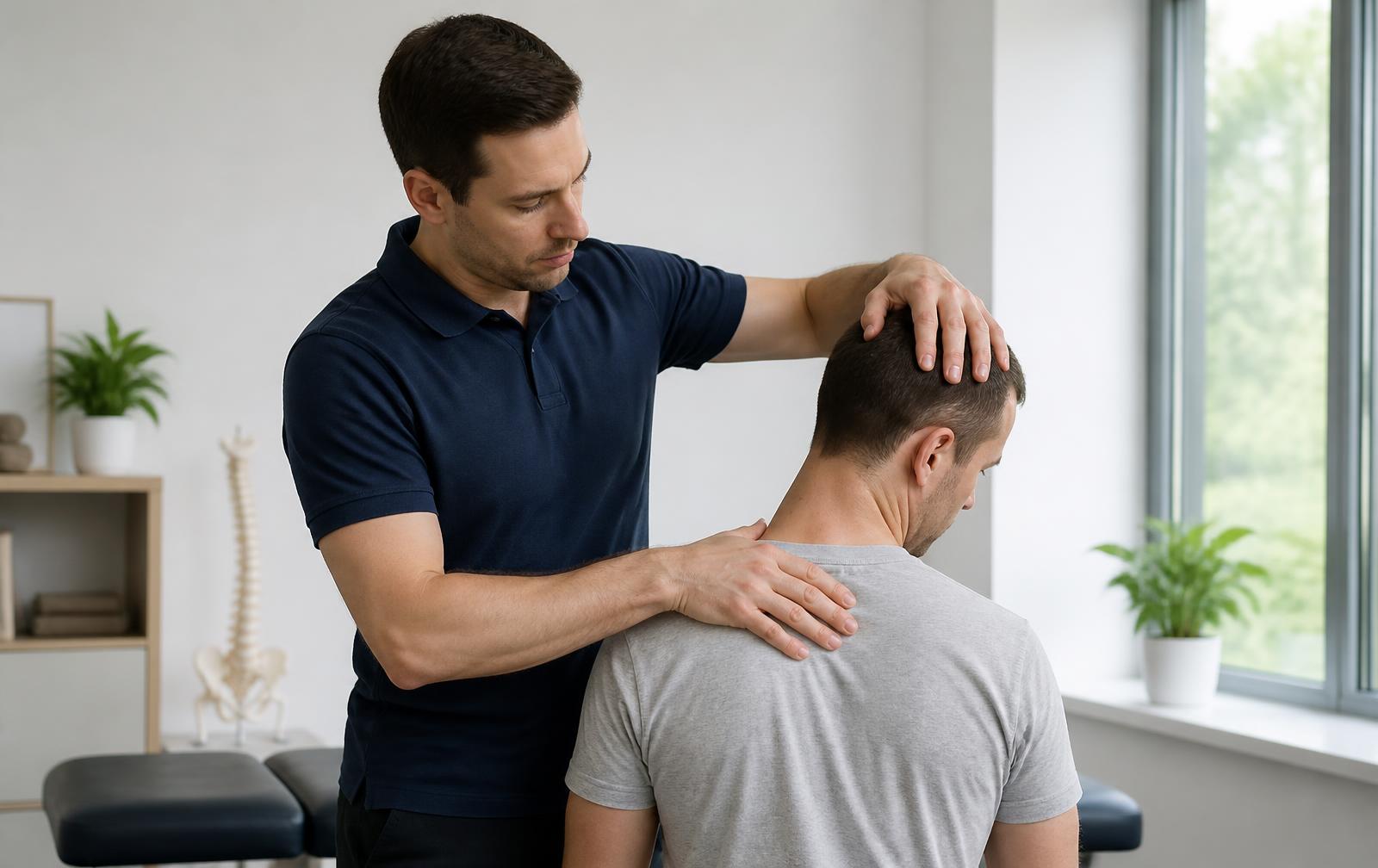
Even a low-speed collision can leave your neck, mid-back, and shoulders stiff for weeks. Medication may take the edge off the pain, but it does not restore the joint mobility and soft tissue function the crash disrupted. That is where chiropractic care after a car accident fits in.
At Keep It Kinetic Chiropractic in Limerick Township, Dr. Kyle Kopicki works with patients from Limerick, Pottstown, Royersford, and the surrounding areas who want an active recovery plan after a crash — one built around movement, not just prescriptions.
Why Crash Injuries Linger
In a collision your body absorbs force in a fraction of a second. The head snaps forward and back, muscles contract to protect the spine, and joints get pushed past their normal range. The result is often a mix of muscle strain, ligament sprain, and restricted spinal joints — what clinicians commonly call a neck sprain or whiplash.
Symptoms frequently show up a day or two later, not at the scene. Neck stiffness, headaches at the base of the skull, mid-back tightness, shoulder pain, and trouble turning your head to check a blind spot are all common. According to MedlinePlus, neck injuries from sudden force can affect muscles, ligaments, discs, and nerves at once, which is why a single treatment rarely addresses everything.
What Pain Medication Does and Does Not Do
Medication has a role, particularly in the first days when pain limits sleep and basic movement. But it manages the signal, not the mechanics. If a joint is not moving well and the surrounding tissue stays guarded, discomfort tends to return once the medication wears off — and stiffness can settle in.
AAOS OrthoInfo notes that recovery from a neck sprain generally involves gradually restoring motion and strength rather than prolonged rest. Care that gets you moving safely, sooner, is the goal.
How Chiropractic Care Supports Crash Recovery
After a thorough history and exam — including screening for anything that needs imaging or a medical referral — care is tailored to what the exam finds. It usually combines several elements:
- Spinal adjustments to address restricted joint motion in the neck and mid-back. The NIH National Center for Complementary and Integrative Health reports that spinal manipulation is commonly used for neck and back pain and is generally considered safe when performed by a trained provider.
- Soft tissue work for the guarded muscles around the injury, using manual therapy, massage, or instrument-assisted techniques.
- Rehab and corrective exercise to rebuild deep neck and mid-back strength so the area tolerates driving, desk work, and lifting again.
- Practical guidance on sleep position, workstation setup, and activity pacing during the weeks that matter most.
You can read more about what treatment looks like on our auto accident injury care page.
Do Not Wait for Symptoms to Get Worse
Crash injuries are frequently underestimated because the adrenaline of the moment masks them. The peer-reviewed research on recovery after motor vehicle collisions shows that neck and back symptoms after a crash often develop or worsen in the days and weeks that follow, and that early recovery trajectories strongly shape long-term outcomes. Getting evaluated within the first week gives you a documented baseline and a head start on care.
What About Coverage?
Pennsylvania auto policies typically include medical benefits that apply to crash-related treatment, and we help patients sort out what applies to their situation. See our insurance and payment options page, and our team will review your options with you before care begins.
Getting Started in Limerick and Pottstown
If you have been in a collision — this week or several months ago — an exam can tell you whether restricted joints and guarded tissue are still holding your recovery back. No contracts and no long-term care plans are required.
Call or text the office, or schedule online, and we will get you in.
This article is general information, not medical advice. Seek immediate medical attention after any crash involving loss of consciousness, severe pain, numbness, or weakness.
Related care at Keep It Kinetic
- Back Pain Treatment — How we evaluate and treat low back pain in Limerick & Pottstown.
- Disc Injuries — Care for bulging and herniated discs.
- Sciatica Relief — Targeted care for radiating leg pain.
- Rehab & Corrective Exercise
Further reading: NIH NIAMS: Back Pain