
Pain on the outside of your hip when you sleep, shoulder discomfort when reaching overhead, or tenderness around your elbow can all make everyday activities more difficult. In some cases, these symptoms may be related to bursitis.
Bursitis occurs when one of the small, fluid-filled sacs that help cushion tissues around your joints becomes irritated or inflamed. It can develop after an injury, from repeated pressure, or through activities that place ongoing stress on a particular area.
At Keep It Kinetic Chiropractic, we help patients in Limerick, Royersford, Pottstown, and surrounding communities manage musculoskeletal pain involving the hips, shoulders, elbows, and other joints. Depending on the cause of your symptoms, conservative treatment and rehabilitation may help reduce discomfort and restore more comfortable movement.
What Is Bursitis?
Bursae are small, fluid-filled sacs located throughout your body. Their purpose is to reduce friction between structures such as bones, tendons, muscles, and skin.
When a bursa becomes irritated, it can cause localized pain, tenderness, and sometimes swelling. Bursitis may develop suddenly after an injury or gradually from repetitive activity.
Some of the more common locations include:
-
Hip bursitis: Typically causes pain along the outside of the hip, especially when lying on that side, walking, or climbing stairs. Many cases of outer hip pain also involve the nearby gluteal tendons rather than the bursa alone.
-
Shoulder bursitis: May contribute to pain when lifting the arm, reaching overhead, or lying on the affected shoulder. It often occurs alongside rotator cuff problems.
-
Elbow bursitis: Usually involves the bursa at the back of the elbow and may produce noticeable swelling, particularly after prolonged pressure or a direct injury.
-
Knee bursitis: Can cause localized swelling and tenderness, often following repetitive kneeling, direct pressure, or trauma.
Although these conditions are grouped under the term bursitis, the appropriate treatment can vary considerably depending on the affected area and underlying cause.
Common Causes and Symptoms of Bursitis
Bursitis may develop from repetitive movements, prolonged pressure on a joint, direct trauma, or irritation involving nearby muscles and tendons. Certain medical conditions, including gout and inflammatory arthritis, can also contribute.
Symptoms vary by location but may include:
-
Localized pain or tenderness around a joint
-
Discomfort with certain movements or activities
-
Pain when lying on the affected side
-
Swelling over the involved area
-
Stiffness or difficulty moving comfortably
-
Increased pain with repetitive activity or direct pressure
Not every painful or swollen joint is caused by bursitis. Tendon injuries, arthritis, and other musculoskeletal conditions can produce similar symptoms.
A bursa can also become infected, particularly around the elbow or knee. Significant redness, warmth, swelling, fever, or rapidly worsening pain requires prompt medical evaluation. Suspected infected bursitis should not be treated with routine chiropractic care.
How We Treat Bursitis at Keep It Kinetic Chiropractic
Our approach begins with determining what's contributing to your symptoms and whether conservative musculoskeletal treatment is appropriate.
For some patients, the primary problem involves irritated tendons or muscles surrounding a joint. Others may have restricted mobility, repetitive pressure on the affected area, or a more significant inflammatory condition that requires medical management.
Depending on your examination findings, treatment may include:
Therapeutic Exercise and Rehabilitation
Exercise can be an important part of managing certain conditions commonly associated with bursitis, particularly shoulder pain and outer hip pain.
We may recommend strengthening exercises, mobility work, and gradual progression of activities to improve your ability to tolerate everyday movement.
For example, patients experiencing outer hip pain may benefit from exercises targeting the muscles that support and stabilize the hip. Shoulder problems may require strengthening of the rotator cuff and surrounding muscles.
Exercises are selected based on your symptoms and adjusted as your tolerance improves.
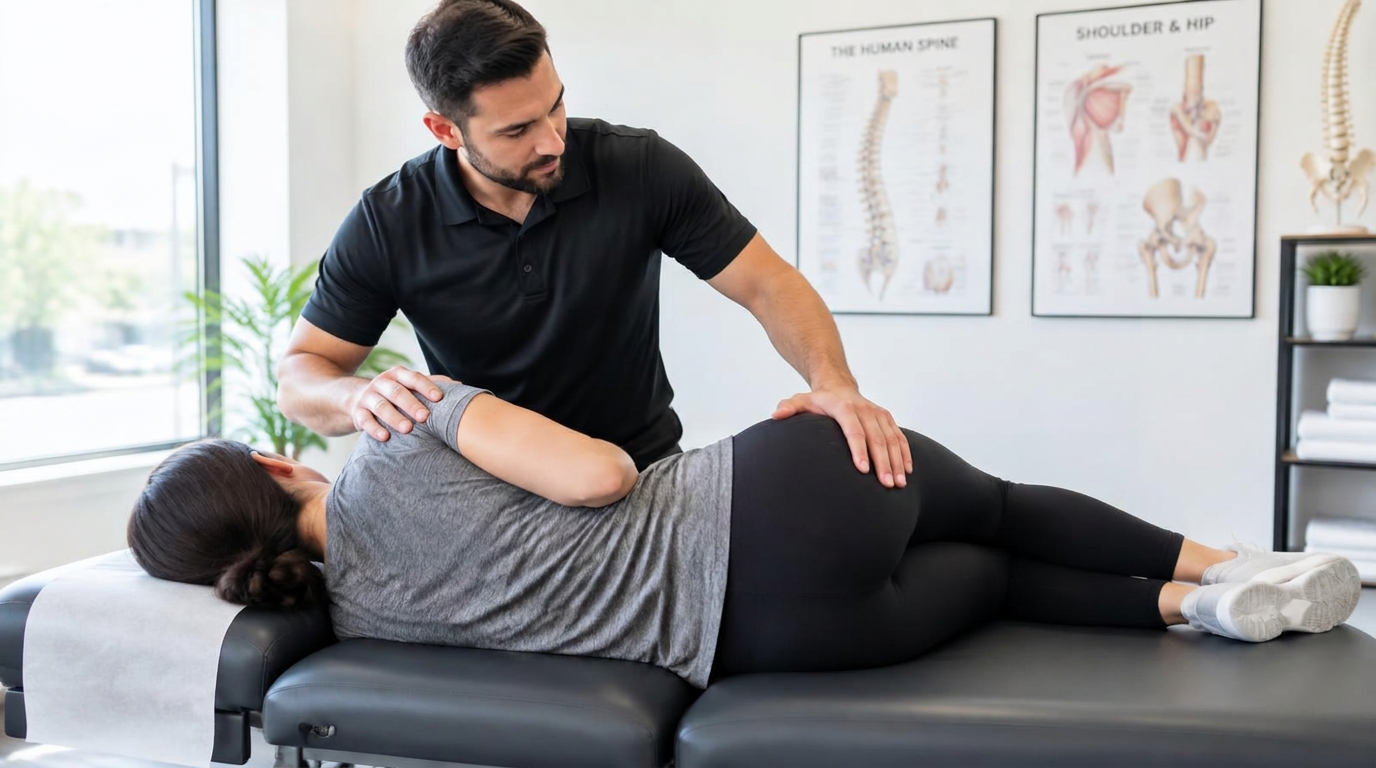
Chiropractic Adjustments and Joint Mobilization
Restricted joint mobility can sometimes contribute to discomfort or difficulty performing certain activities.
When appropriate, chiropractic adjustments or gentle joint mobilization may help improve movement in nearby joints and address associated musculoskeletal symptoms.
Adjustments do not directly eliminate inflammation inside a bursa, and we would not manipulate an acutely swollen or potentially infected area.
Soft Tissue Therapy
The muscles and tendons surrounding a painful joint can become tight, tender, or sensitive.
Massage therapy and other soft tissue techniques may help manage associated muscle discomfort and improve tolerance for movement.
Treatment is adapted to avoid unnecessary pressure directly over an irritated bursa, particularly when significant swelling or tenderness is present.
Activity Modifications and Home Care
Sometimes the most important part of managing bursitis is identifying and temporarily modifying the activities that continue to irritate the area.
This might involve changing how you sleep to reduce pressure on a painful hip, modifying repetitive overhead movements, or avoiding prolonged pressure on your elbows or knees.
Ice may help manage discomfort in certain cases, and gradual return to activity is generally preferable to avoiding movement indefinitely.
Why Does Bursitis Sometimes Keep Coming Back?
Recurring pain around the hips or shoulders isn't always caused by repeated inflammation of a bursa.
For example, persistent pain along the outside of the hip frequently involves irritation of the gluteal tendons. If the surrounding muscles remain sensitive to activity or aren't tolerating their usual demands, symptoms may continue even after the initial discomfort improves.
That's why we look beyond the location of your pain and consider strength, mobility, activity levels, and other contributing factors.
Our goal is to help you manage your current symptoms while improving your ability to return to normal activities.
Frequently Asked Questions About Bursitis
Can a chiropractor help with bursitis?
Chiropractic care may be helpful for certain musculoskeletal problems associated with bursitis, especially when treatment includes appropriate rehabilitation, activity modifications, and management of surrounding muscle or joint discomfort. However, treatment depends on the location and underlying cause, and some cases require medical evaluation.
How long does bursitis take to heal?
Recovery varies considerably. Some uncomplicated cases improve within a few weeks, while persistent shoulder or hip problems involving nearby tendons may require several months of rehabilitation. The severity of symptoms, affected area, and response to treatment all influence recovery.
Should I stretch if I have bursitis?
It depends on the location and cause of your pain. Gentle mobility exercises may be beneficial, but certain stretches can increase pressure on irritated tendons or bursae. For example, aggressive stretching across the hip may aggravate some forms of outer hip pain. Exercises should be selected based on your specific condition.
Get Help With Bursitis and Joint Pain in Limerick, PA
Whether you're dealing with a painful shoulder, recurring hip discomfort, or another joint problem, our goal is to help you understand what's causing your symptoms and determine the best way to manage them.
At Keep It Kinetic Chiropractic, we'll evaluate your condition, explain our findings, and recommend treatments based on your individual needs. If your symptoms suggest a problem that requires medical management, we'll help you understand the appropriate next steps.
Schedule an appointment online or call/text us at 484-455-4664 to get started.
Ready to feel better?
Book online with Keep It Kinetic or call our Limerick office — we'll get you on the schedule.