

Our Services
Kinesio Tape
What's That Colorful Tape Athletes Are Wearing?
You've probably seen it before.
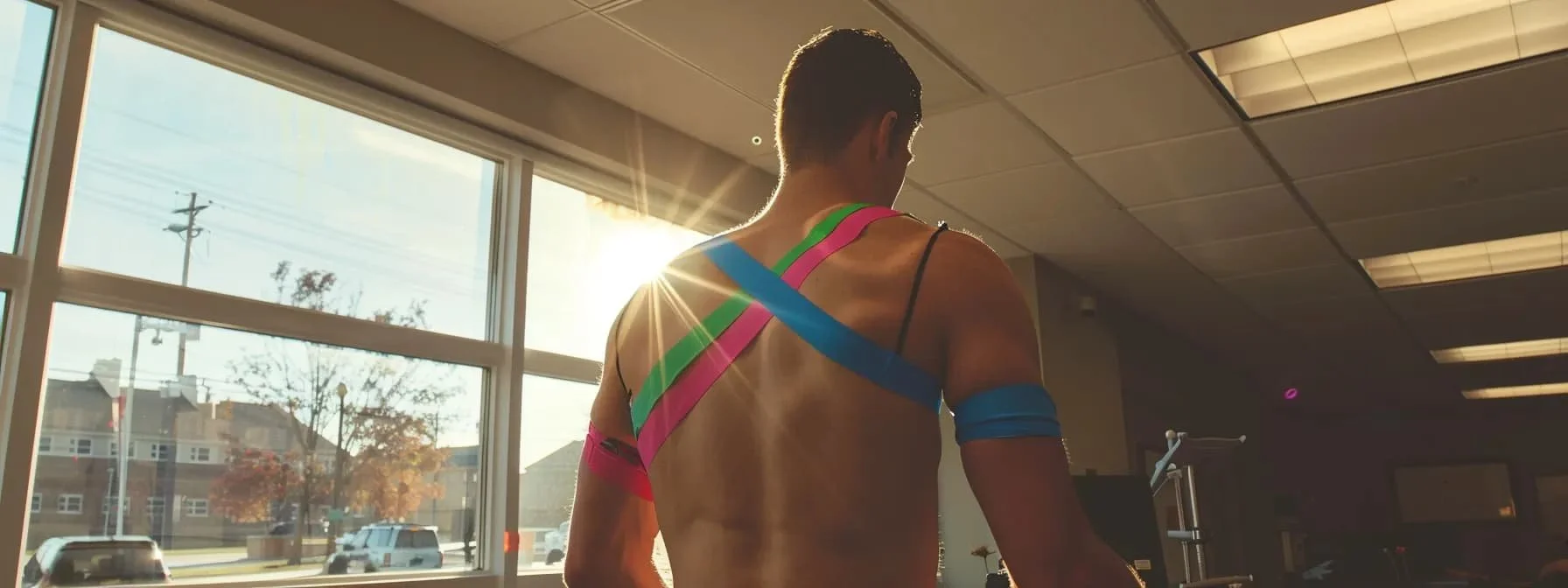
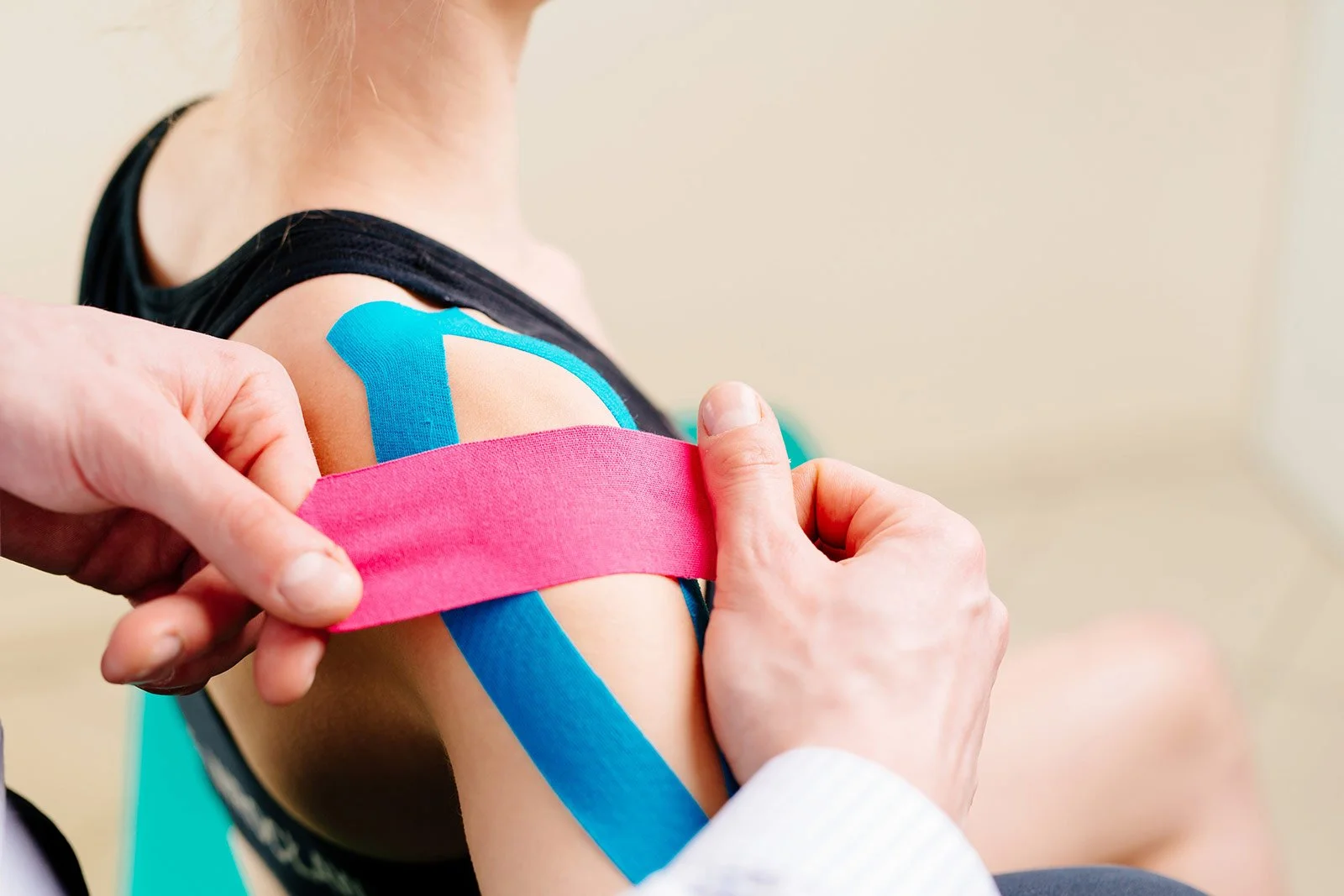
The colorful strips of tape on someone's shoulder, knee, back, or leg are called kinesiology tape, or kinesio tape.
We use RockTape in our office, and I've completed both the basic and advanced FMT courses through RockTape.
I use it most often with athletes, active patients, and people dealing with an injury who could use a little extra support without completely restricting how the area moves.
It's not going to magically fix an injury.
But for the right patient, it's a simple tool that can be really useful.
How Is Kinesio Tape Different From Regular Athletic Tape?
Traditional athletic taping is usually designed to restrict movement.
Think about an athlete having an ankle taped before a game. The tape is wrapped tightly to limit how much the ankle can move.
Kinesio tape is different.
It's stretchy and designed to move with you.
That means we can tape an area while still allowing you to bend, twist, run, lift, throw, swing, or perform other movements.
That's one of the main reasons I like using it with athletes and active patients.
We can give an area some support without completely locking it down.
What Do We Use Kinesio Tape For?
There are a lot of different ways to use kinesio tape.
Some of the areas I commonly tape include:
- Shoulders
- Knees
- Ankles
- Elbows
- Wrists
- Low back
- Upper back and neck
- Feet
I may use it with muscle strains, sprains, tendon problems, sports injuries, or other musculoskeletal problems where I think taping could be helpful.
That doesn't mean every shoulder or knee problem needs tape.
Like everything else in our office, I'll use it when I think it makes sense.
I Use It a Lot With Athletes
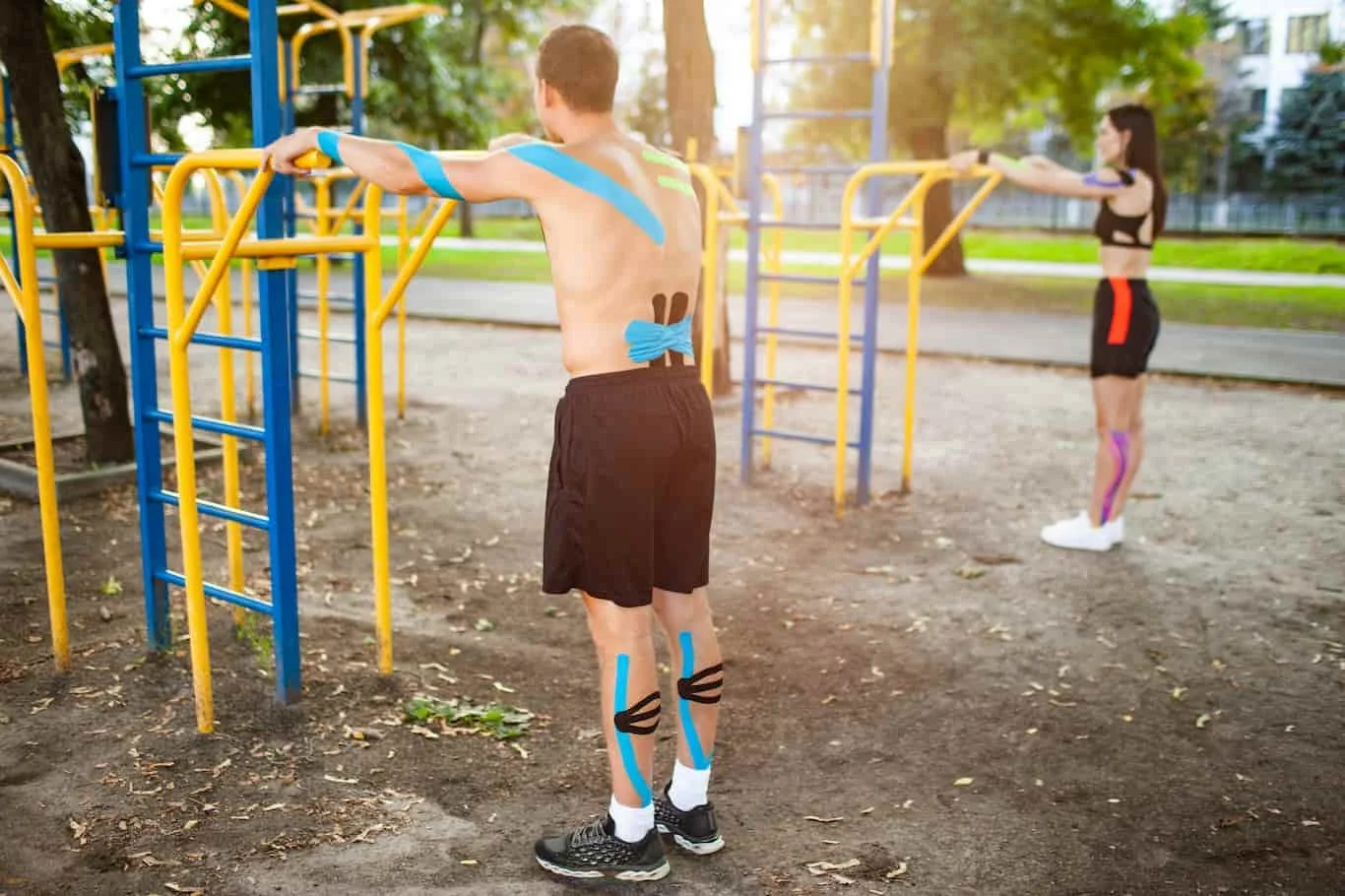
This is probably where most people have seen kinesio tape.
I've played sports my entire life, and I still play competitive volleyball, so I understand the difference between telling an athlete to simply stop doing something and actually helping them figure out how to keep participating when it's reasonable to do so.
Sometimes an injury means you shouldn't play.
Other times, you can continue participating while we work on the problem.
Kinesio tape can be one of the tools we use in those situations because it allows us to provide some support without the restriction of traditional athletic tape.
I've used it with athletes from a variety of sports, including volleyball, football, running, golf, and recreational athletics.
The goal isn't to use tape to hide a serious injury. It's to use it appropriately when it can help you keep moving.
It's Not Just for Athletes
You definitely don't need to be an athlete to use kinesio tape.
Sometimes I'll tape an area for someone who hurt themselves at work, working around the house, exercising, or just doing everyday activities.
I've used it for patients dealing with shoulder problems, knee pain, elbow and tendon problems, ankle injuries, and plenty of other issues.
If you're moving, you can potentially benefit from something that provides support while still allowing you to move.
What Does It Feel Like?
Most patients barely notice it once it's on.
I'll cut the tape specifically for the area we're treating and apply it directly to your skin.
It stretches and moves with your body, so you should still be able to use the area normally.
That's the point.
You may notice some additional support or simply feel more comfortable moving the area while the tape is on.
And yes, you can pick the color.
How Long Do I Leave It On?
One of the nice things about kinesio tape is that you don't have to remove it as soon as you leave the office.
Depending on the application and how well the tape sticks, it can often stay on for several days.
You can usually shower with it on. Just don't aggressively scrub the tape, and pat it dry rather than rubbing it with a towel.
Eventually the edges will start peeling up and you'll know it's time to take it off.
If your skin becomes irritated, itchy, or uncomfortable, remove it sooner.
Does the Color Matter?
No.
This is probably more important than it should be, because everyone has an opinion about which color they want.
The colors don't do different things.
Black tape doesn't make you stronger. Blue isn't for inflammation. Pink isn't a special muscle tape.
It's the same tape.
Pick whichever color you like.
Tape Is Not a Treatment Plan
This is probably the most important part of this page.
If you have a shoulder injury, knee problem, ankle sprain, or something else going on, putting tape on it doesn't mean we've fixed the problem.
We still need to figure out what's wrong.
Depending on the condition, your actual treatment may include:
- Chiropractic adjustments
- Rehabilitation exercises
- Soft tissue treatment
- IASTM/Graston Technique
- Massage therapy
- Kinesio tape
- Other treatments available in the office
Tape may be one part of that.
Sometimes I'll use it for several visits. Sometimes I'll use it once. Sometimes we won't use it at all.
It's another tool in the toolbox, not the toolbox itself.
Can I Learn to Tape Myself?
For certain problems, absolutely.
If we're using the same relatively simple taping application repeatedly and it's something you can reasonably do yourself, I'm happy to show you how.
I'd rather teach you how to do a simple application at home than make you come into the office every time you need a new piece of tape.
Some applications are harder to do yourself, especially depending on where they are on the body.
We'll figure out what makes sense.
Frequently Asked Questions
Sometimes a Little Extra Support Helps
That's really how I look at kinesio tape.
It's simple. It's comfortable. It doesn't significantly restrict your movement, and for the right injury or activity, it can be a useful addition to what we're already doing.
I've been trained in how to use it, I keep RockTape in the office, and if I think it'll help, we'll tape you up.
If you don't need it, we won't.