Condition
Elbow Pain, Tennis Elbow & Golfer's Elbow Treatment in Limerick, PA
Elbow pain can make everyday activities surprisingly difficult. Whether you're lifting weights, playing pickleball, working with tools, or simply picking up a gallon of milk, pain around your elbow can interfere with things you normally wouldn't think twice about.
Sometimes the discomfort starts after a specific activity or injury. Other times, it gradually develops from repetitive movements or increased demands on the muscles and tendons around your elbow.
At Keep It Kinetic Chiropractic, we help patients throughout Limerick, Royersford, Pottstown, and surrounding communities manage elbow pain and return to their normal activities. Our approach focuses on identifying what's contributing to your symptoms and using appropriate hands-on treatment, rehabilitation, and activity modifications to help you recover.
Common Causes of Elbow Pain
Elbow pain can involve several different structures, including tendons, muscles, joints, and nerves. Some of the more common conditions include:
Tennis Elbow (Lateral Epicondylitis)
Tennis elbow causes pain along the outside of the elbow, where the tendons responsible for extending your wrist and fingers attach to the bone.
Despite the name, you don't have to play tennis to develop it. Tennis elbow frequently affects people who perform repetitive gripping, lifting, twisting, or wrist movements.
Activities such as weightlifting, using tools, playing pickleball, or even carrying groceries can aggravate symptoms.
Tennis elbow is also called lateral elbow tendinopathy. Although it's sometimes described as tendinitis, persistent cases often involve changes in the tendon rather than ongoing inflammation alone.
Golfer's Elbow (Medial Epicondylitis)
Golfer's elbow affects the tendons along the inside of the elbow, particularly those involved in gripping and bending the wrist.
Like tennis elbow, it isn't limited to athletes. Repetitive gripping, lifting, throwing, and certain occupational activities can all contribute.
Patients often notice pain when shaking hands, lifting objects, gripping equipment, or performing activities that involve wrist flexion.
Other Causes of Elbow Pain
Not every painful elbow is caused by a tendon injury. Other possibilities include:
- Elbow bursitis: Irritation or swelling of the fluid-filled sac located at the back of the elbow.
- Nerve irritation: Compression or irritation of the ulnar nerve near the elbow can cause tingling or numbness in the ring and pinky fingers. or irritation of the ulnar nerve near the elbow can cause tingling or numbness in the ring and pinky fingers.
- Joint arthritis: Degenerative or inflammatory changes can contribute to stiffness, swelling, and restricted movement.
- Muscle strains and ligament injuries: Sudden injuries or excessive loading can damage tissues surrounding the elbow.
- Referred pain: Certain neck or nerve-related problems can produce symptoms that extend into the arm and elbow.
Identifying the actual source of your symptoms is important because these conditions don't all respond to the same treatments.
Common Symptoms of Elbow Injuries
Depending on the cause, elbow symptoms may include:
- Pain along the inside or outside of the elbow
- Tenderness when pressing on the affected tendons
- Pain when gripping, lifting, or twisting objects
- Reduced grip strength, often because gripping increases pain
- Stiffness or difficulty fully bending or straightening the elbow
- Discomfort that increases during or after repetitive activity
- Numbness or tingling when a nearby nerve is involved
Most gradual-onset elbow pain isn't an emergency. However, significant swelling or deformity after an injury, inability to move the elbow, or a hot, swollen joint accompanied by fever requires prompt medical evaluation.
How We Treat Elbow Pain at Keep It Kinetic Chiropractic
Treatment depends on the structures involved, how long you've had symptoms, and which activities are aggravating your elbow.
For tendon-related conditions such as tennis elbow and golfer's elbow, simply resting until the pain disappears isn't always enough. Although temporarily reducing irritating activities may help, rebuilding your tolerance for movement is often an important part of recovery.
Depending on your examination findings, treatment may include:
Therapeutic Exercise and Rehabilitation
Progressive strengthening is one of the primary approaches we use for tendon-related elbow pain.
Tendons need to tolerate the forces placed on them during everyday activities. When those demands exceed what a tendon can comfortably handle, pain may develop or persist.
We may recommend exercises targeting the wrist extensors, wrist flexors, forearm muscles, and grip strength. These can include isometric exercises, controlled strengthening movements, and eccentric exercises, where the muscle lengthens under tension.
As your symptoms improve, rehabilitation can progress toward heavier resistance and activities that more closely resemble your work, exercise, or sports.
Our goal is to help you gradually return to those activities without repeatedly aggravating your symptoms.
Soft Tissue Therapy
Painful elbow tendons are often accompanied by tenderness or discomfort in the surrounding forearm muscles.
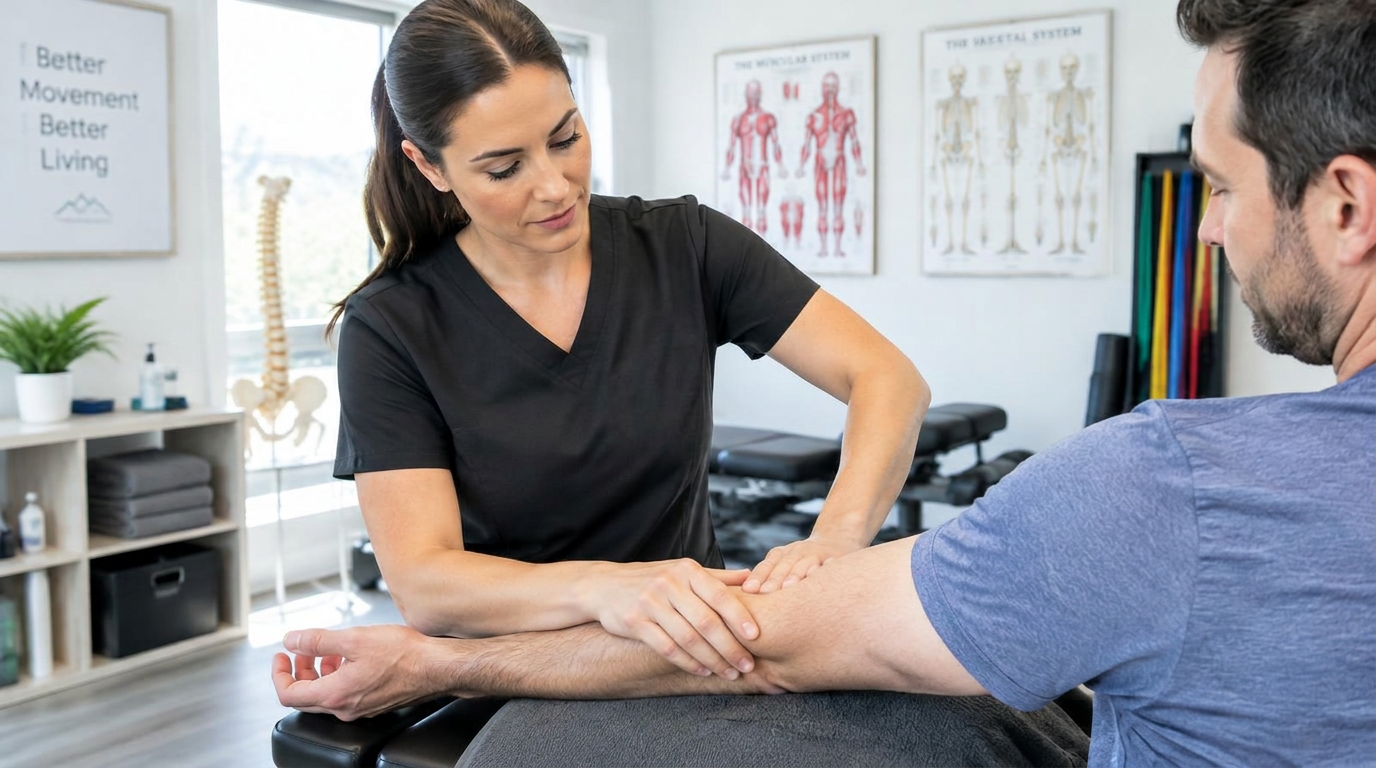
Massage therapy and instrument-assisted soft tissue mobilization (IASTM) may help manage associated muscle discomfort and improve short-term tolerance for movement.
These techniques don't physically break apart tendon scar tissue or directly repair an injured tendon. Instead, we may use them as supportive treatments alongside strengthening and activity modifications.
Chiropractic Adjustments and Joint Mobilization
Some patients with elbow pain also experience stiffness or restricted movement involving the elbow, wrist, or other nearby joints.
When appropriate, chiropractic adjustments or gentle joint mobilization may help address associated joint discomfort and mobility limitations.
These treatments are not intended to reposition tendons or eliminate tendon damage. For most tendon-related elbow problems, rehabilitation remains an important part of care.
Supportive Taping and Activity Modifications
Depending on your condition, kinesiology taping or a counterforce elbow brace may provide temporary symptom relief during certain activities.
We'll also discuss ways to adjust activities that repeatedly aggravate your symptoms.
That might mean temporarily reducing your lifting volume, changing how you grip certain tools, modifying your exercise routine, or gradually increasing your workload as your elbow improves.
The goal isn't to stop using your arm altogether. It's to find an appropriate balance between allowing symptoms to settle and maintaining enough activity to support recovery.
Why Does Tennis Elbow Sometimes Take So Long to Heal?
One frustrating aspect of tennis elbow and golfer's elbow is that symptoms can persist for months, particularly when the same activities repeatedly aggravate the tendon.
Tendons generally adapt to changes in loading more gradually than muscles. Even when pain starts improving, the tendon and surrounding muscles may not yet tolerate your previous activity levels comfortably.
This is one reason symptoms sometimes return when patients immediately resume heavy lifting, repetitive work, or sports at their previous intensity.
Recovery often involves gradually increasing strength and activity tolerance rather than waiting for complete pain relief before moving again.
Although many cases improve with conservative management, persistent elbow pain may require additional evaluation, especially when symptoms aren't responding as expected.
Frequently Asked Questions About Elbow Pain
Can a chiropractor help with tennis elbow?
Chiropractors may help manage certain symptoms associated with tennis elbow through appropriate rehabilitation, activity modifications, and selected manual treatments. Chiropractic adjustments alone are not an established cure for tendon injuries, and treatment should focus on improving comfort and restoring function.
What's the difference between tennis elbow and golfer's elbow?
Tennis elbow generally causes pain along the outside of the elbow, while golfer's elbow affects the inside. Both involve tendons that control wrist and hand movements, but different muscle groups and activities tend to aggravate each condition.
How long does tennis elbow take to heal?
Recovery varies depending on symptom severity, how long the problem has been present, and the physical demands placed on the tendon. Some cases improve within several weeks, while others can take several months or longer. Gradually returning to activity and improving strength can be important parts of recovery.
Should I stop exercising if I have elbow pain?
Not necessarily. You may need to temporarily modify exercises that significantly aggravate your symptoms, but complete rest is often unnecessary. Appropriately selected strengthening exercises and gradual increases in activity can help you maintain function while managing discomfort.
Get Help With Elbow Pain in Limerick, PA
Whether you're dealing with tennis elbow, golfer's elbow, or another type of persistent elbow pain, our goal is to help you understand what's causing your symptoms and develop a practical plan to address them.
At Keep It Kinetic Chiropractic, we'll evaluate your condition, explain our findings, and recommend treatments based on your individual needs. We want to help you get back to work, exercise, sports, and everyday activities without unnecessary restrictions or predetermined treatment plans.
Schedule an appointment online or call/text us at 484-455-4664 to get started.
Ready to feel better?
Book online with Keep It Kinetic or call our Limerick office — we'll get you on the schedule.