
Condition
Foot Pain & Plantar Fasciitis Treatment in Limerick, PA
Foot pain can make even the simplest activities uncomfortable. Whether you're dealing with sharp heel pain when getting out of bed, aching arches after a long day at work, or discomfort every time you go for a walk, it's difficult to ignore a problem that affects nearly every step you take.
Sometimes foot pain begins after an injury or a sudden increase in activity. Other times, it develops gradually without an obvious cause.
At Keep It Kinetic Chiropractic, we help patients throughout Limerick, Royersford, Pottstown, and surrounding communities manage foot pain and return to their normal activities. Our approach focuses on identifying what's contributing to your symptoms and using appropriate hands-on treatment, rehabilitation, and activity modifications to help you move more comfortably.
Common Causes of Foot Pain
The foot contains numerous bones, joints, muscles, ligaments, and tendons that work together to support your body and allow you to walk, run, and balance.
Pain can develop when one or more of these structures become irritated or injured. Some of the more common conditions include:
Plantar Fasciitis
Plantar fasciitis is one of the most common causes of heel pain. It involves irritation and changes within the plantar fascia, a thick band of connective tissue running along the bottom of your foot from the heel toward the toes.
Patients frequently describe sharp pain under the heel when taking their first steps in the morning or after sitting for an extended period. Symptoms may improve after walking for a few minutes but return following prolonged standing or activity.
Despite its name, plantar fasciitis isn't always primarily an inflammatory condition. Persistent cases often involve changes in the tissue's ability to tolerate repeated loading.
Arch Pain
Pain through the arch of the foot can develop from irritation of the plantar fascia, muscle strains, tendon problems, or increased stress associated with changes in activity.
Some patients experience arch discomfort after prolonged standing, walking, or exercising, while others notice pain associated with particular shoes or surfaces.
Metatarsalgia and Forefoot Pain
Metatarsalgia describes pain around the ball of the foot, typically near the base of the toes.
It may develop with increased walking or running, repetitive pressure, changes in footwear, or conditions involving the joints and soft tissues of the forefoot.
Other Causes of Foot Pain
Other conditions we may evaluate include:
- Achilles tendinopathy: Pain and stiffness involving the tendon at the back of the heel.
- Joint stiffness or arthritis: Reduced mobility and discomfort involving the smaller joints of the foot.
- Bunions: Changes around the big toe joint that may cause pain or difficulty wearing certain shoes.
- Nerve irritation: Conditions such as tarsal tunnel syndrome or Morton's neuroma may cause burning, tingling, or numbness.
Stress fractures and other injuries can also cause foot pain. These conditions may require imaging, temporary activity restrictions, or medical treatment rather than routine chiropractic care.
Common Symptoms of Foot Problems
Depending on the underlying cause, symptoms may include:
- Sharp heel pain with your first steps in the morning
- Aching or tenderness along the arch
- Pain around the ball of the foot or toes
- Stiffness after sitting or resting
- Discomfort with prolonged standing, walking, or running
- Swelling or tenderness in a specific area
- Burning, numbness, or tingling when a nerve is involved
The location of your pain and the activities that aggravate it can help distinguish between different foot conditions.
For example, first-step heel pain is commonly associated with plantar fasciitis, while localized pain that increases with impact activities may raise concern for a stress injury.
If you experience significant pain after trauma, cannot bear weight, or develop a red, hot, swollen foot, medical evaluation may be necessary. This is especially important if you have diabetes, reduced foot sensation, or signs of infection.
How We Treat Foot Pain at Keep It Kinetic Chiropractic
Treatment depends on the source of your symptoms, how long you've been experiencing pain, and the demands you place on your feet.
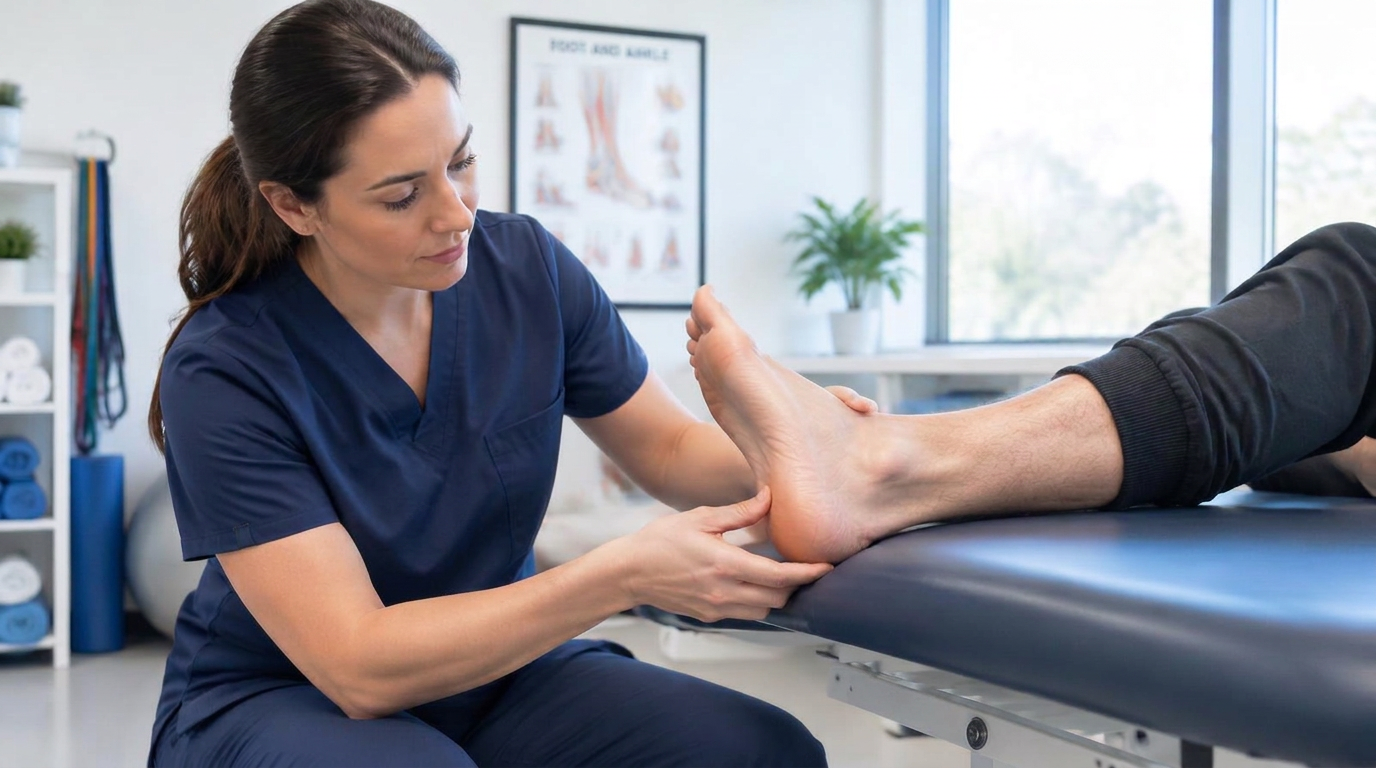
Our examination may include evaluating your foot and ankle mobility, strength, tenderness, walking mechanics, and other relevant findings.
Depending on your condition, treatment may include:
Therapeutic Exercise and Rehabilitation
Exercise is an important part of managing many foot problems, particularly plantar fasciitis.
We may recommend stretching exercises for the plantar fascia and calf muscles, along with strengthening exercises targeting the muscles of the foot and lower leg.
For some patients, rehabilitation may involve simple exercises to improve foot strength and flexibility. Others may benefit from progressive calf raises, balance exercises, or more advanced strengthening to prepare for running, sports, or physically demanding activities.
Our goal is to help improve your ability to tolerate everyday activity rather than simply providing temporary symptom relief.
Chiropractic Adjustments and Joint Mobilization
The foot and ankle contain numerous joints that can sometimes become stiff or uncomfortable, especially after previous injuries or periods of reduced activity.
When appropriate, chiropractic adjustments or gentle joint mobilization may help improve mobility and reduce associated discomfort.
For conditions such as plantar fasciitis, manual treatment may be useful as part of a broader rehabilitation program rather than as a standalone solution.
Soft Tissue Therapy
Painful foot conditions can involve tenderness or tightness in the plantar fascia, calf muscles, and other surrounding tissues.
Massage therapy and instrument-assisted soft tissue mobilization (IASTM) may be used to address associated discomfort and flexibility limitations.
These techniques don't physically break apart scar tissue or permanently correct the plantar fascia, but selected manual therapies can be useful alongside stretching and strengthening.
Supportive Taping, Footwear, and Activity Modifications
Sometimes changing how much stress is placed on an irritated area can make a noticeable difference.
Depending on your condition, we may recommend temporary activity modifications, supportive taping, or changes in footwear.
Certain patients may also benefit from arch supports, heel cups, or orthotics, particularly when used alongside other appropriate treatments.
The goal isn't necessarily to avoid walking or exercising. It's to manage activities that aggravate your symptoms while gradually rebuilding your tolerance for movement.
Why Does Plantar Fasciitis Sometimes Last So Long?
Plantar fasciitis can be frustrating because symptoms may improve temporarily and then return when you increase your activity.
For some patients, the plantar fascia has become sensitive to the repeated demands of standing, walking, or running. Even when the initial discomfort settles, the tissue may not yet tolerate your usual activity level comfortably.
This is why treatment often involves more than stretching or resting.
Progressive strengthening, appropriate footwear, activity modifications, and other conservative treatments can help patients gradually return to the activities they enjoy.
Recovery varies. Some cases improve over several weeks, while persistent plantar fasciitis may take several months or longer to fully settle.
Frequently Asked Questions About Foot Pain
Can a chiropractor help with plantar fasciitis?
Chiropractic care may help manage plantar fasciitis symptoms when treatment includes appropriate manual therapy, stretching, strengthening exercises, and activity modifications. Joint mobilization and soft tissue treatment may provide additional benefits for selected patients, but adjustments alone are not a proven cure for plantar fasciitis.
Why do my feet hurt when I first get out of bed?
Heel pain during your first few steps in the morning is a common symptom of plantar fasciitis. The plantar fascia can become sensitive after periods of rest, making those first movements uncomfortable. However, other conditions can cause similar symptoms, so an examination may be helpful if the pain persists.
Should I keep walking if I have plantar fasciitis?
In many cases, yes, although you may need to temporarily modify how far or how long you walk. Activities that significantly increase your symptoms may need to be reduced while you work on improving strength and activity tolerance. Complete rest is rarely necessary for uncomplicated plantar fasciitis.
Do I need custom orthotics for foot pain?
Not necessarily. Some patients benefit from supportive footwear or over-the-counter inserts, while others may require more individualized support. Orthotics generally work best as part of a broader treatment plan rather than as the only treatment for plantar fasciitis.
Get Help With Foot Pain in Limerick, PA
Whether you're dealing with plantar fasciitis, recurring heel pain, arch discomfort, or another foot problem, our goal is to help you understand what's causing your symptoms and find a practical approach to managing them.
At Keep It Kinetic Chiropractic, we'll evaluate your condition, explain our findings, and recommend treatment based on your individual needs. We want to help you get back to walking, working, exercising, and enjoying your normal activities with less discomfort.
Schedule an appointment online or call/text us at 484-455-4664 to get started.
Ready to feel better?
Book online with Keep It Kinetic or call our Limerick office — we'll get you on the schedule.