
Shoulder bursitis can turn simple tasks — reaching into a cabinet, putting on a jacket, sleeping on your side — into a daily source of pain. When the small, fluid-filled sacs (bursae) that cushion the shoulder joint become inflamed, movement quickly becomes limited and slow to improve. At Keep It Kinetic Chiropractic in Limerick, PA, one of the tools we frequently use to help calm that inflammation and support recovery is therapeutic ultrasound.
So the question patients often ask is a fair one: can therapeutic ultrasound for shoulder bursitis actually help it heal faster? Let's take an honest look.
Therapeutic ultrasound is a non-invasive, drug-free option for shoulder pain — no needles, no medication, no downtime. We use it every week for patients across Pottstown and Limerick Township, and you can usually be seen within a few days. Schedule online or call or text us to have your shoulder evaluated.
What Is Shoulder Bursitis?
The shoulder contains several bursae that reduce friction between bones, tendons, and muscles as the joint moves. When one of these sacs — most commonly the subacromial bursa — becomes irritated from overuse, repetitive overhead activity, or a nearby rotator cuff issue, it can swell and become painful. According to the Mayo Clinic, symptoms typically include a dull ache, stiffness, and pain that worsens with movement or pressure.
Left unaddressed, shoulder bursitis can linger for weeks or months, and it often shows up alongside other issues like impingement or tendonitis. That's why we always start with a full assessment before deciding on a treatment plan — read more about our approach to shoulder pain.
How Therapeutic Ultrasound Works
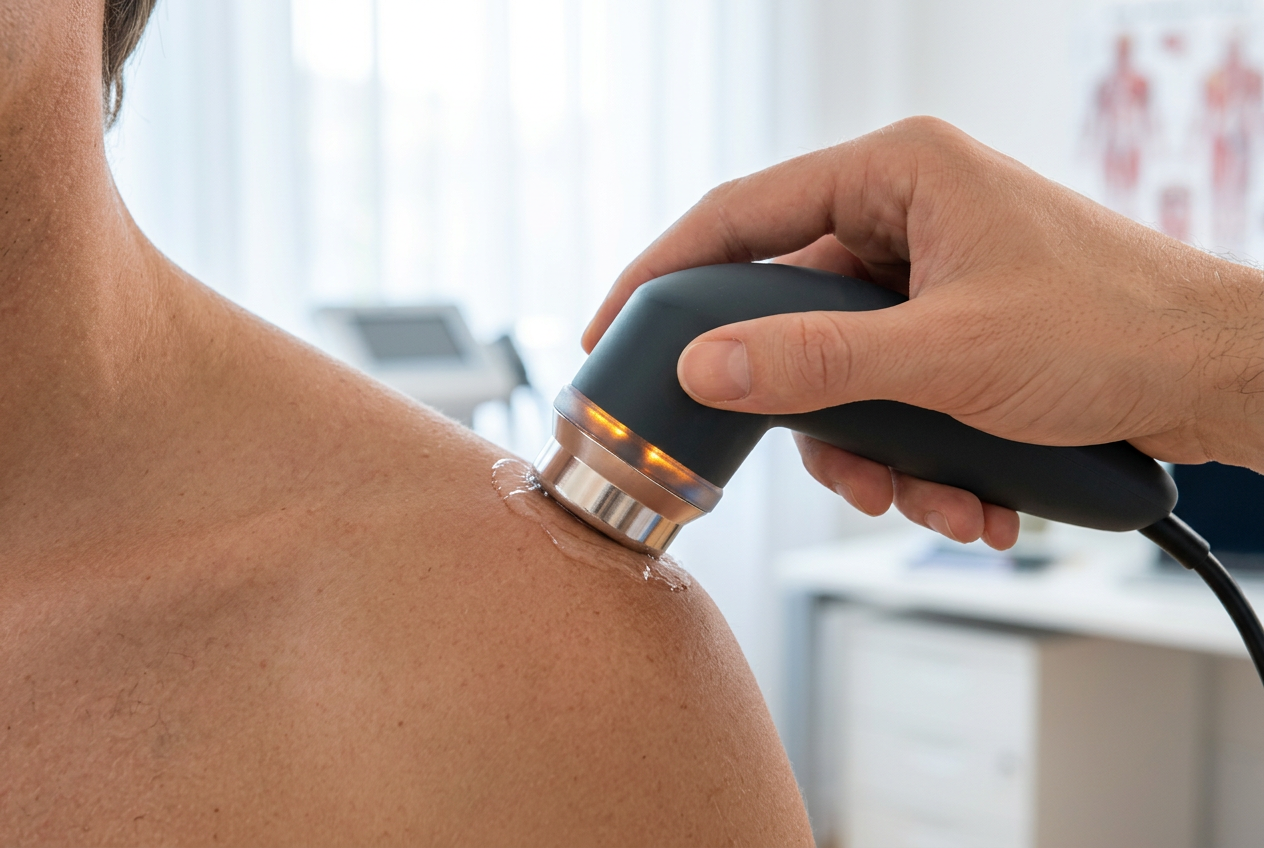
Therapeutic ultrasound uses high-frequency sound waves — well above what the human ear can detect — to gently penetrate deep into soft tissue. A small handheld applicator glides over the skin with a conductive gel, delivering sound waves that create two useful effects:
- Deep, mild heating that increases local blood flow and helps relax tight tissue.
- Non-thermal cellular vibration that may support the body's natural repair processes in inflamed soft tissue.
The StatPearls clinical reference (NIH) describes therapeutic ultrasound as a well-established modality used to help manage soft tissue conditions like bursitis, tendonitis, and muscle strain through its thermal and non-thermal effects.
Can It Help Shoulder Bursitis Heal Faster?
For many patients with shoulder bursitis, therapeutic ultrasound can be a meaningful part of getting better — not because it "cures" bursitis on its own, but because it helps create the conditions the body needs to recover. Specifically, it may help:
- Reduce pain and tenderness around the shoulder.
- Decrease local inflammation in the affected bursa.
- Improve blood flow to support tissue healing.
- Soften stiff tissue so stretches and exercises are more effective.
The Cleveland Clinic highlights that bursitis usually responds best to a combination of rest, targeted therapy, and gradual reintroduction of movement — not any single treatment in isolation.
How We Use Ultrasound at Keep It Kinetic
In our Limerick office, therapeutic ultrasound is rarely a stand-alone treatment. It's most effective when paired with the other tools we use for shoulder bursitis, including chiropractic adjustments to improve joint mechanics, soft tissue work, and specific rehab exercises. Sessions are short, comfortable, and non-invasive — most patients simply feel a light warmth over the shoulder.
Your care plan is always built around your specific presentation. If you're dealing with lingering shoulder pain, reach out to schedule an evaluation so we can determine whether therapeutic ultrasound — and the rest of our care — is a good fit for you.
What to Expect During a Therapeutic Ultrasound Session
If you have never had ultrasound therapy before, here is how a visit goes at our Pottstown and Limerick Township office:
- Quick check-in and assessment. We confirm where the pain sits and how your shoulder is moving that day before treating.
- Gel and applicator. A water-based gel goes on the skin, then a small handheld head glides slowly over the sore area for roughly five to ten minutes.
- How it feels. Most people feel nothing more than a mild, pleasant warmth and light pressure. It should never sting or burn — tell us right away if it does and we adjust the settings.
- No downtime and no medication. The gel wipes off, you get dressed, and you can drive and work right away.
- What comes next in the same visit. We usually follow ultrasound with hands-on soft tissue work, an adjustment if indicated, and two or three shoulder exercises to do at home.
The Bottom Line
Therapeutic ultrasound isn't a magic switch, but for the right patient it can meaningfully speed up recovery from shoulder bursitis by calming inflammation, easing pain, and making the rest of your rehab work better. Combined with hands-on care and a smart exercise plan, it's one more way we help patients get back to moving well and living comfortably.
Quick answer: what therapeutic ultrasound can and cannot do
Therapeutic ultrasound is a passive treatment that uses sound waves to warm deeper tissue around the shoulder. It may help reduce pain sensitivity and improve tissue flexibility so you can tolerate the rehab exercises that drive lasting change. It is not a stand-alone cure for shoulder bursitis, and it works best combined with graded loading, joint mobility work, and activity changes.
What the research says
Reviews of shoulder pain care report that ultrasound alone produces modest, short-term effects, while exercise-based rehabilitation shows the most consistent benefit. That is why we use ultrasound as a supporting tool inside a plan, not the plan itself. See the NIH StatPearls overview of shoulder bursitis and the AAOS OrthoInfo guide to common shoulder problems for background.
Common questions
How many sessions does it take?
Most patients who respond notice a change within two to four visits. If nothing changes, we adjust the plan rather than repeat the same treatment.
Does it hurt?
No. You feel a warm gliding sensation from the ultrasound head and gel.
What else helps shoulder bursitis?
Rotator cuff and scapular strengthening, soft tissue work, sleep and desk position changes, and gradual return to overhead activity. Explore our rehab services, therapeutic ultrasound page, and shoulder pain care.
Related care at Keep It Kinetic
Further reading: NIH NCCIH: Massage Therapy