
Knee pain can make everyday activities more difficult than they should be. Whether you're having trouble climbing stairs, experiencing discomfort during a workout, or feeling stiff after sitting for a while, knee problems can interfere with just about anything that involves being on your feet.
Sometimes knee pain starts suddenly after an injury. Other times, it develops gradually from increased activity, repetitive stress, or changes within the joint.
At Keep It Kinetic Chiropractic, we help patients throughout Limerick, Royersford, Pottstown, and surrounding communities manage knee pain and improve their ability to move comfortably. Our approach focuses on identifying what's contributing to your symptoms and using appropriate hands-on treatment, rehabilitation, and activity modifications to help you return to your normal activities.
Common Causes of Knee Pain
The knee is a complex joint that relies on muscles, tendons, ligaments, cartilage, and surrounding structures to function properly.
Because several different problems can produce similar symptoms, understanding the cause of your knee pain is an important first step.
Runner's Knee (Patellofemoral Pain Syndrome)
Runner's knee is a common cause of pain around or behind the kneecap. Despite its name, you don't have to be a runner to develop it.
Patients often notice discomfort when climbing stairs, squatting, running, or sitting with their knees bent for extended periods.
Patellofemoral pain can be influenced by several factors, including changes in activity, strength, and how the knee tolerates repeated loading.
Rehabilitation focusing on both the hip and knee muscles is one of the primary treatment approaches for this condition.
Knee Arthritis
Osteoarthritis is a common cause of knee pain, particularly in middle-aged and older adults.
It involves changes in the cartilage and other tissues within the joint that can contribute to stiffness, swelling, and discomfort with movement.
Patients may notice pain when walking, getting out of a chair, or using stairs, along with stiffness after periods of inactivity.
Although chiropractic treatment cannot reverse arthritis or rebuild damaged cartilage, appropriate strengthening, mobility exercises, and conservative care may help improve comfort and function.
Patellar Tendinitis and Other Tendon Injuries
The patellar tendon connects the kneecap to the shinbone and helps transfer force when walking, running, and jumping.
Repetitive jumping, running, or increased physical activity can sometimes overload this tendon, leading to pain just below the kneecap.
This condition is commonly called jumper's knee or patellar tendinopathy.
Rehabilitation generally focuses on gradually strengthening the affected tissues and improving their ability to tolerate physical activity.
Meniscus Injuries
The menisci are two pieces of cartilage within the knee that help distribute forces and stabilize the joint.
Meniscus injuries can occur during twisting movements or develop gradually as the tissue changes with age.
Symptoms may include pain along the joint line, swelling, catching sensations, or difficulty bending and straightening the knee.
Some meniscus problems can be managed conservatively, while others require orthopedic evaluation, particularly when the knee becomes mechanically locked.
Ligament Sprains and Sports Injuries
Injuries involving the ACL, MCL, or other knee ligaments can occur during sports, falls, or sudden twisting movements.
These injuries may cause swelling, pain, and a feeling that the knee is unstable.
The severity of the injury determines the appropriate treatment. Significant ligament injuries may require bracing, imaging, or orthopedic evaluation before rehabilitation.
Common Symptoms of Knee Problems
Depending on the underlying cause, symptoms may include:
-
Pain around, behind, or below the kneecap
-
Discomfort along the inside or outside of the knee
-
Stiffness after sitting or sleeping
-
Pain when squatting, climbing stairs, or running
-
Swelling or tenderness around the joint
-
Clicking, popping, or catching sensations
-
Weakness or a feeling that the knee may give out
-
Difficulty fully bending or straightening the knee
The location of your pain and the activities that aggravate it can help determine which structures may be involved.
Not every knee injury is appropriate for routine chiropractic treatment. Significant swelling after trauma, inability to bear weight, obvious deformity, or a knee that becomes locked and cannot straighten requires prompt medical evaluation. A hot, swollen knee accompanied by fever also requires urgent assessment.
How We Treat Knee Pain at Keep It Kinetic Chiropractic
Our first step is figuring out what's causing your symptoms.
We'll discuss when your pain started, what makes it better or worse, and how it's affecting your daily activities.
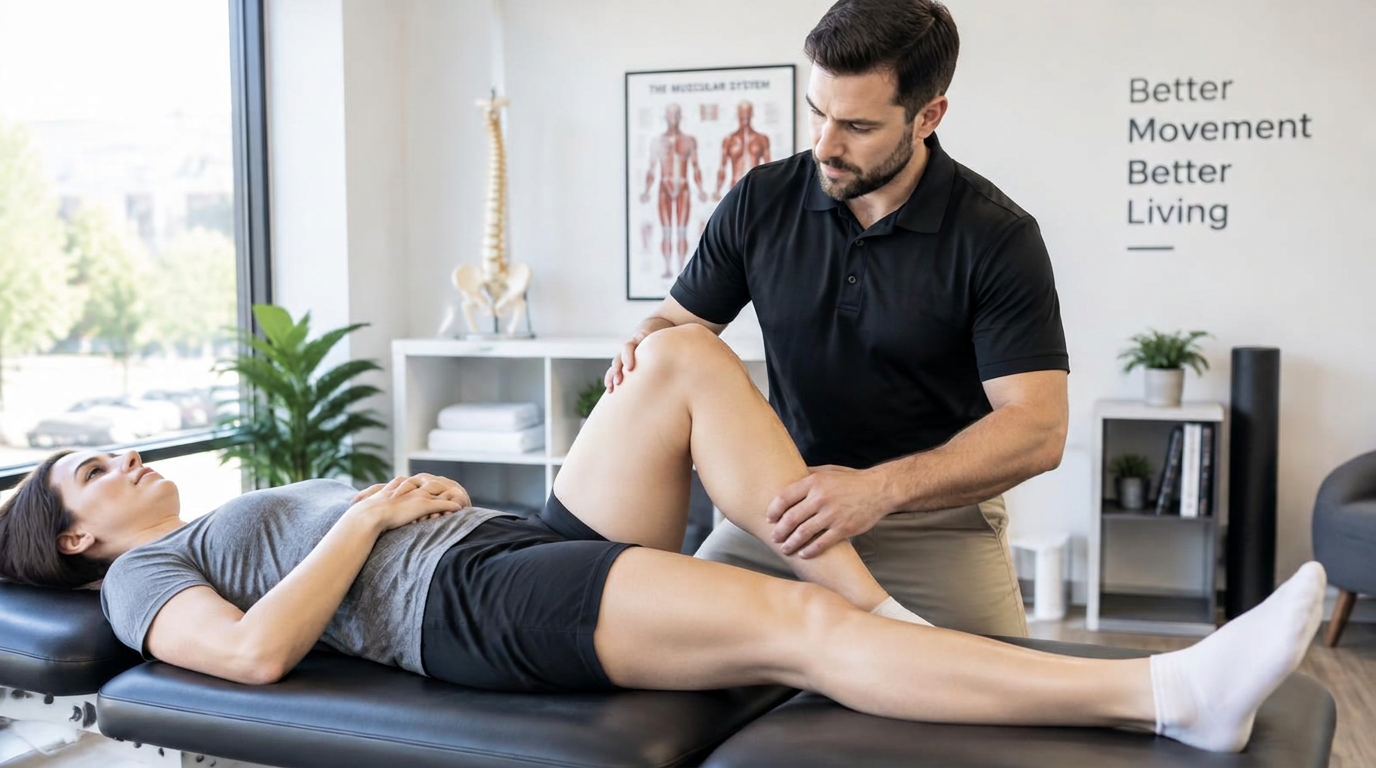
Your examination may include evaluating knee mobility, strength, tenderness, balance, and functional movements such as walking or squatting. When appropriate, we'll also assess your hips and ankles to identify other factors that may be contributing.
From there, we'll determine whether conservative treatment is appropriate or whether additional medical evaluation would be more beneficial.
Depending on your condition, treatment may include:
Therapeutic Exercise and Rehabilitation
Exercise is one of the most important components of managing many common knee problems.
For patients with patellofemoral pain, strengthening the quadriceps and hip muscles can help improve symptoms and physical function.
For those with knee arthritis, regular strengthening and appropriate physical activity can improve mobility and make everyday activities easier.
Tendon injuries may require a gradual strengthening program that increases the amount of force the tendon can comfortably tolerate.
Exercises may begin with simple movements and progress toward squats, step-ups, balance training, or more demanding activities as your strength and symptoms improve.
Our goal is to teach you exercises that you can continue independently, helping you manage your condition outside the office rather than relying entirely on treatment appointments.
Chiropractic Adjustments and Joint Mobilization
Knee pain can sometimes occur alongside joint stiffness or restricted mobility.
When appropriate, gentle joint mobilization or chiropractic adjustments may help improve comfortable movement and manage associated joint discomfort.
We may also evaluate the hip or ankle if mobility restrictions in those areas appear relevant to your symptoms.
These treatments don't repair torn ligaments, rebuild cartilage, or permanently correct knee alignment. For many knee conditions, manual treatment is best used alongside an appropriate rehabilitation program rather than as a standalone solution.
Massage and Soft Tissue Therapy
Knee problems can sometimes be accompanied by muscle tightness, tenderness, or discomfort involving the quadriceps, hamstrings, calves, and surrounding tissues.
Massage therapy and instrument-assisted soft tissue mobilization may help manage associated muscle discomfort and make movement more comfortable.
These techniques may provide temporary symptom relief, but they aren't a substitute for appropriate strengthening or medical treatment when more significant injuries are present.
Supportive Taping and Activity Modifications
In certain situations, supportive taping may provide short-term relief, particularly for patients experiencing pain around the kneecap.
We may also recommend modifying activities that repeatedly aggravate your symptoms.
This might mean temporarily reducing running mileage, adjusting your workout routine, modifying squatting exercises, or gradually increasing your walking tolerance.
The goal isn't to avoid using your knee. It's to find ways to stay active while allowing symptoms to improve.
Why Does Knee Pain Sometimes Keep Coming Back?
Recurring knee pain can be frustrating, especially when symptoms improve with rest but return as soon as you resume normal activities.
For some patients, the affected muscles or tendons haven't regained the strength or tolerance needed for their usual activity levels.
Others may have underlying arthritis, recurrent irritation, or an injury that hasn't fully recovered.
This is why simply waiting for pain to disappear isn't always enough.
Our goal is to help you manage your current symptoms while addressing relevant strength, mobility, and activity limitations that may contribute to recurring problems.
Not everyone needs ongoing chiropractic treatment. For many patients, a short course of care combined with a practical home exercise program may be appropriate.
Frequently Asked Questions About Knee Pain
Can a chiropractor help with knee pain?
Chiropractic care may help manage certain types of musculoskeletal knee pain, particularly when treatment includes appropriate rehabilitation, joint mobilization, and activity modifications. The best approach depends on whether your symptoms involve arthritis, tendon irritation, patellofemoral pain, or another condition.
Why does my knee hurt when I walk up or down stairs?
Pain with stairs is common in patellofemoral pain syndrome and knee osteoarthritis, although tendon problems and other injuries can produce similar symptoms. An examination can help identify which structures are contributing to your discomfort.
Should I exercise if I have knee arthritis?
In most cases, yes. Regular physical activity and strengthening are among the most effective conservative approaches for managing knee osteoarthritis. Exercises can be modified based on your symptoms, strength, and mobility.
Do I need an MRI for knee pain?
Not necessarily. Many knee problems can initially be evaluated through your medical history and physical examination. Imaging may be appropriate following significant injuries, when mechanical locking or other concerning findings are present, or when results would change treatment decisions.
Can knee pain come from my hip or back?
Yes. Problems involving the hip or lumbar spine can sometimes produce pain that is felt around the knee. Hip strength and mobility may also influence how certain activities affect the knee. This is why evaluating surrounding areas can be useful when your symptoms suggest involvement beyond the knee itself.
Get Help With Knee Pain in Limerick, PA
Whether you're experiencing knee pain while running, discomfort when climbing stairs, or stiffness associated with arthritis, we're here to help you understand what's causing your symptoms.
At Keep It Kinetic Chiropractic, we'll evaluate your condition, explain our findings, and recommend treatments based on your individual needs.
Our goal is to help you move more comfortably, return to your normal activities, and develop a practical plan for managing your symptoms without unnecessary treatment.
Schedule an appointment online or call/text us at 484-455-4664 to get started.
Ready to feel better?
Book online with Keep It Kinetic or call our Limerick office — we'll get you on the schedule.