
Why Athletes Use Kinesio Tape—and How It Can Help You Stay Active While Recovering
· Dr. Kyle Kopicki (Keep It Kinetic Chiropractic)
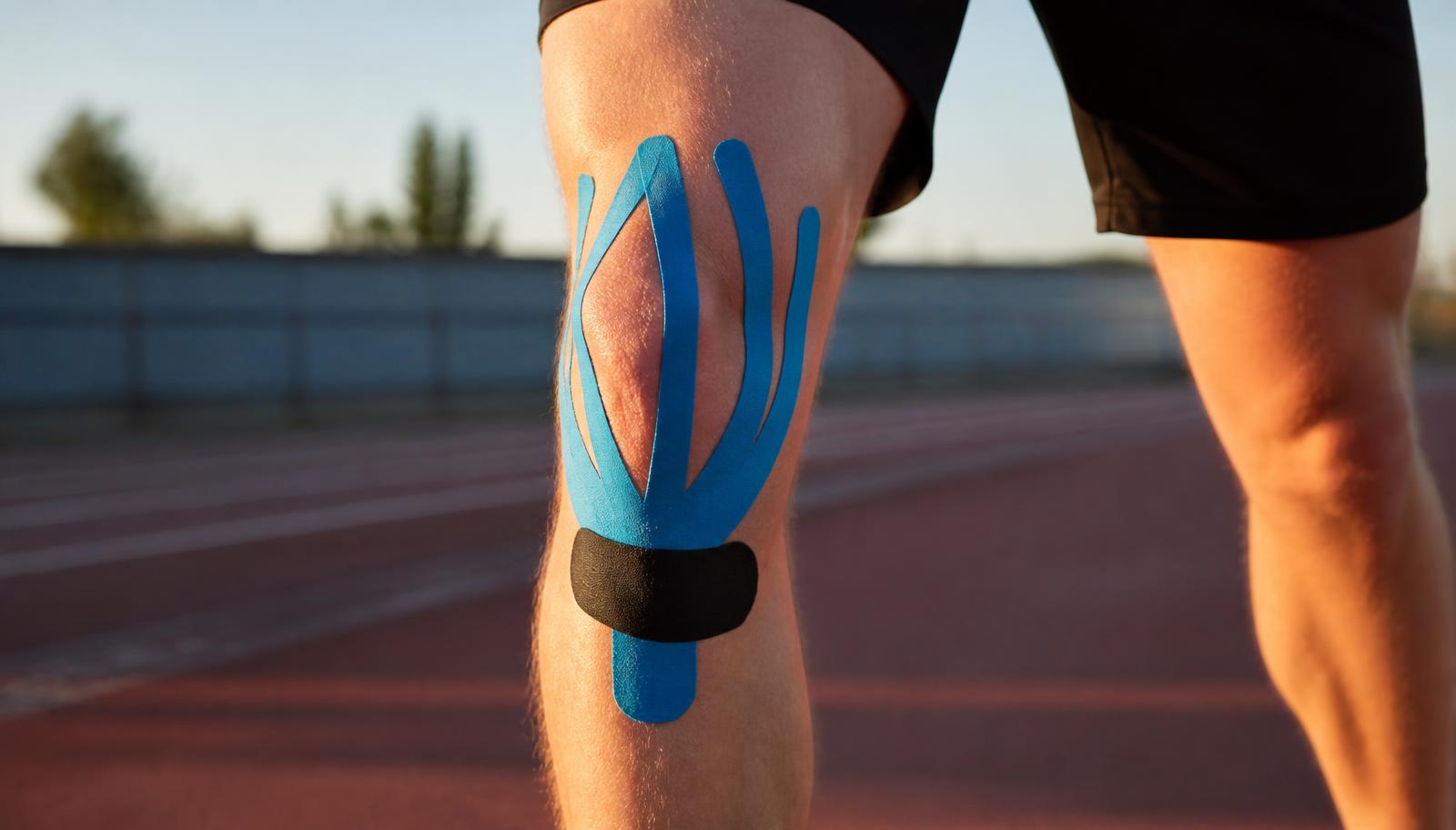
You have seen it on marathon runners, volleyball players at the Pottstown Rumble, and CrossFit athletes at the gym: strips of bright elastic tape fanned across a shoulder, knee, or calf. It is not decoration. The most talked-about kinesio tape benefits are pain relief and support that does not lock down your movement — which is exactly why athletes reach for it when they want to keep training through a nagging injury.
At Keep It Kinetic Chiropractic in Limerick, PA, we use kinesiology taping as one piece of a bigger plan. Here is what the tape actually does, what the research says, and when it makes sense for you.
What Kinesio Tape Is (and Isn't)
Kinesio tape is a thin, elastic cotton tape with a wave-pattern adhesive. It stretches roughly like human skin, so once applied it moves with you instead of restricting you. That is the key difference from traditional white athletic tape, which is rigid and designed to block motion at a joint.
What it is not: a cure, a brace, or a replacement for rehab. Tape does not repair a torn tendon or fix why your knee hurts every time you run hills. It is a tool that can reduce pain and improve how a joint feels while the underlying problem is addressed through rehab and corrective exercise and hands-on care.
Why Athletes Use It
1. Pain relief without giving up motion
The tape gently lifts and decompresses the skin over a sore area, which appears to change how the nervous system interprets input from that tissue. Athletes typically describe less sharp pain and a feeling of being "held together" while still able to sprint, jump, or lift. Reviews of the literature find kinesiology taping can produce short-term reductions in musculoskeletal pain, especially when combined with exercise rather than used alone — see this systematic review of kinesiology taping in musculoskeletal injury.
2. Support for irritated muscles and tendons
A strip along an overworked calf, hamstring, or upper trapezius can offload a small amount of the demand on that tissue. For soft-tissue injuries — strains, sprains, and tendon irritation — that light assistance often makes the difference between resting completely and continuing modified training. The AAOS guide to sprains, strains, and soft-tissue injuries is a good primer on what these injuries need to heal.
3. Swelling and bruising management
Fan-style applications over a swollen ankle or bruised quad create channels in the skin that may help lymphatic drainage, which is why you often see taping in the days after a contact injury.
4. A cue for better movement
Tape across the mid-back or around a shoulder gives constant, gentle feedback. Many patients use that sensation as a reminder not to slump or not to let a knee cave inward during squats — a small but useful nudge while they retrain the pattern.
When Taping Helps Most
- In-season injuries where full rest is not realistic and you need to manage a sports injury while still competing.
- Overuse pain — runner's knee, shin splints, Achilles or rotator cuff irritation, plantar fasciitis.
- Post-injury swelling in an ankle, knee, or elbow.
- Return-to-activity phases, paired with loading exercise so the tissue actually gets stronger.
Where it helps least: as a stand-alone fix. If the tape is the only thing between you and pain, the plan is incomplete. Staying active while you heal matters — adults should still aim for the weekly activity targets in the CDC physical activity guidelines for adults — and taping is one way to keep moving safely.
How We Use It at Keep It Kinetic
Dr. Kyle is certified in basic and advanced Functional Movement Techniques (FMT) taping, and we use RockTape in the office. Application matters: direction of pull, tension, and where the anchor sits all change the effect, and a strip slapped on without an exam is mostly a placebo with adhesive.
In practice, taping usually shows up alongside:
- A movement exam to find why the tissue is overloaded
- Chiropractic adjustments to restore joint mobility
- Soft-tissue work such as IASTM or massage
- Progressive home exercise so the fix outlasts the tape
Tape typically stays on for two to five days, including showers and workouts. If you notice itching, a rash, or increased pain, take it off — and if pain persists beyond a couple of weeks, get it evaluated rather than re-taping indefinitely.
Want to Try It?
If you are dealing with a nagging injury and do not want to stop training, taping combined with the right rehab plan is often the fastest route back. Learn more about our kinesio taping services, or schedule an evaluation at our Limerick Township office and we will build a plan around your sport and your season.
Related care at Keep It Kinetic
Further reading: AAOS OrthoInfo: Shoulder Problems